
The 2026 Midterms have officially wrapped up, with most of the results being called for winning candidates and ballot measures alike. This election was very surprising, with a blue wave sweeping the country, and many notable republican politicians losing their seats. Some of the results of this election, both in terms of ballot measures that were passed/failed, or candidates who were elected, are specifically relevant to the rights of youth in individual states or at the national level. In the following article, NYRA will examine the most notable results of the 2026 midterms from the perspective of youth rights issues and explain the impact of these results on the rights of young people going forward. These results have the biggest impact on student rights, youth medical autonomy, young adult voting rights, LGBTQ youth rights, and more! When discussing candidates, we are neither endorsing nor condemning them, we are simply reporting on their stances on youth rights issues, or how their policies have affected youth in their state or at the national level. The reporting results are based on numbers as of the morning of Wednesday, November 4th.
Table of Contents
- Ballot Measures
- Texas Flips to Democrat Control
- Amy Acton Defeats Vivek Ramaswamy – Ohio Governor
- Roy Cooper defeats Michael Whatley – North Carolina, U.S Senate
- David Crowley Defeats Tom Tiffany – Wisconsin Governor
- Byron Donalds Defeats David Jolly – Florida Governor
- Richard Barrera Leads Sonja Shaw – California Superintendent of Public Instruction
- Xavier Becerra Defeats Steve Hilton – California Governor
- Dean Roy Receives A Thousand Votes
- Candidates NYRA Interviewed
Ballot Measures
Several important ballot measures were up to be decided on by voters during the midterm elections. A few of these were very relevant to the rights of young people in their states, dictating things like Abortion Access, Youth Privacy, and transgender rights in school.
Washington Parental Rights Measure
The most notable ballot measure for youth rights during the 2026 Midterm election was Initiative IL26-001 in Washington, often referred to as the parental rights Initiative. IL26-001 would have specifically repealed protections for abused youth regarding their school records, by restoring the right of parents who are under criminal investigations for crimes against their child to access their child’s medical, disciplinary and school counseling records. It would have also restored parental “opt-out” abilities to remove students from activities involving subjects such as sexuality, mental health, religion, political beliefs, and family values. For young people living with controlling or intolerant parents, these opt-outs can become a tool for informational isolation, allowing parents to extend the restrictions of the home into the classroom and cut students off from discussions, resources, and supportive environments that may help them understand their identity, recognize unhealthy family dynamics, or seek help. Because of this, NYRA has campaigned extensively against this initiative.
As of Tuesday night, 47.3% (912,202) of voters approved the ballot measure, while 52.7% (1,018,262) voted against it. This means that the Initiative was defeated by voters, and young people have retained protections against abusive parents accessing their records, as well as protections against unfair parental “opt-out” powers. This is a major victory for youth rights, and common sense. A proposition that specifically repeals protections for abused youth should never come close to passing, as the direct effect is giving abusive parents increased ability to harm their children.
Transgender Youth Measures
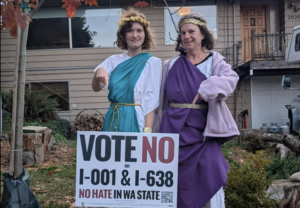
Another ballot measure in Washington that has the potential to harm young people, is Initiative IL26-638, which aims to restrict transgender women from playing in girls sports in schools. While many other measures went into place with a similar idea, this measure in Washington was explicitly harsh as it prevented the usage of birth certificates to verify the biological sex of girls. Instead, they had to obtain a genital exam from a medical professional, in order to verify that they were a biological woman. This measure doesn’t just harm transgender youth, it harms the rights of all women and girls in the state, by potentially forcing invasive medical procedures and violating their bodily autonomy just for them to be allowed to play sports.
Unfortunately, as of Tuesday night, 56.8% (1,119,192) voted “yes” on Initiative 638, while 43.2% (852,539) voted “no.” This means that initiative IL26-638 has passed, exposing all girls in the state to these invasive medical examinations. This is a major defeat for the bodily autonomy of youth and girls in Washington. Along with the passage of this ballot measure, many other ballot measures in the state targeting transgender athletes were also passed. In Nebraska, Initiative 442 passed with approximately 68% of the vote, amending the state constitution to require school athletic teams to be designated by biological sex and prohibiting transgender girls from participating on girls’ teams. In Arizona, Proposition 318 was leading with approximately 57% support, restricting transgender students’ participation in school athletics and their access to bathrooms, locker rooms, and other sex-designated facilities. Finally, in Colorado, Proposition 134 was leading with approximately 52% support, proposing to require elementary, secondary, and collegiate athletic teams to classify participants according to biological sex rather than gender identity. Although the measures in Arizona, Washington, and Colorado were still awaiting final results, it is likely that they will pass as well.
Missouri Amendment 3 and Parental Consent for Abortion
Another ballot measure relevant to youth rights was Missouri Amendment 3, which focused on reproductive rights. The proposed amendment would have repealed those protections and prohibited most abortions, with limited exceptions for medical emergencies, fetal anomalies, and pregnancies resulting from rape or incest within the first 12 weeks. The aspect of the amendment that would have violated youth rights, was that the amendment would establish parental consent as a requirement for a minor to receive an abortion in the state of Missouri. This requirement could have created additional barriers for pregnant teenagers, especially those living in abusive or controlling households, those whose parents oppose abortion, or those unable to safely disclose their pregnancies to their families. By making parental authorization a constitutional requirement, the proposal would also have made it more difficult for future lawmakers to expand minors’ reproductive autonomy. Additionally, Amendment 3 would have constitutionally prohibited certain gender-affirming medical treatments for minors, including puberty blockers, hormone treatments, and surgeries, subject to specified exceptions.
Luckily, Missouri voters rejected Amendment 3, with approximately 55% voting against the measure and 45% supporting it, preserving constitutional protections for reproductive freedom that voters had approved in 2024. This represents a victory for youth rights, and minors’ medical autonomy. In Missouri, the right for a minor to obtain an abortion stays with the minor, rather than being controlled by a parent, who could potentially be abusive, or not have the best interests of the minor at heart. A teenager facing an unwanted pregnancy is already in an extremely tough situation, and should not have to also be subject to potential abuse or mistreatment by their parents for wanting an abortion.
These concerns are illustrated by the experiences of Jessica, a Texas teenager interviewed for a 2020 peer-reviewed study on adolescents seeking abortions without parental consent. After her boyfriend’s parents discovered her pregnancy and informed her family, Jessica’s father subjected her to degrading verbal abuse, leaving her feeling humiliated and ashamed. She subsequently had to leave her home, while her boyfriend’s parents refused to lend the couple a car to travel to her abortion appointment, further obstructing her access to healthcare. Her experience demonstrates how mandatory parental involvement can expose vulnerable teenagers to the very mistreatment they were trying to avoid.
A separate 2021 Human rights watch Documented the case of Sarah, a teenager seeking an abortion. Sarah (a pseudonym) was a teenager whose father had previously hit her after discovering she had a boyfriend. When she became pregnant and wanted an abortion, she feared that disclosing her pregnancy and abortion decision would expose her to further violence. Her parents were described as extremely religious and strict. Because of her father’s history of physical abuse, Sarah had to seek legal assistance through the ACLU of Illinois to obtain an abortion without notifying her parents. Along with this, Avery, a 16-year-old Illinois teenager, was working as a cashier three days a week while helping care for six younger siblings. Her older sister had previously become pregnant as a teenager. Rather than allowing her to obtain an abortion, their parents forced her to continue the pregnancy and subsequently kicked her out of their home. When Avery herself became pregnant, she feared her parents would subject her to the same treatment. She sought help from the ACLU’s judicial bypass program to avoid disclosing her pregnancy.
Minors should have the right to obtain abortions without parental consent, due to the threat of abuse and mistreatment that they could face from their parents for attempting to get their consent. Parental consent requirements for abortion are dangerous for youth who are already in tough situations, and the rejection of Missouri amendment 3 protects the rights of these teenagers.
Local Measure to Lower the Voting Age
In a local ballot measure that is specifically relevant to youth rights, we need to look at the city of Culver city in California. Measure YV in Culver City, California proposed lowering the minimum voting age from 18 to 16 for municipal and school district elections. If approved and implemented, the measure would have allowed 16 and 17 year old residents to vote for city council members, school board representatives, and local ballot measures, giving teenagers greater influence over government decisions that directly affect their lives. Young people are subject to countless government policies concerning their education, transportation, public spaces, and personal freedoms, yet are generally prohibited from voting for the officials responsible for those decisions because of a general voting age being set at 18 years old. Many teenagers already work, pay taxes, drive, and participate in their communities, which is proof as to why they should not be excluded from the democratic process.
The initiative was spearheaded by Vote16 Culver City, a youth led campaign affiliated with the national Vote16USA movement. Culver City had previously considered a similar proposal in 2022, when it was defeated by just 16 votes, making the 2026 election another important opportunity to expand youth enfranchisement. However, early election results showed Measure YV heading toward defeat, with approximately 56% of voters opposing the proposal and 44% supporting it. Although final results were still pending as of November 4, the apparent rejection represents another setback for efforts to lower the voting age and expand young people’s direct participation in the democratic decisions that govern their lives. The defeat of this measure is a defeat for youth rights, and how once again, people’s presumption about the incompetence of youth harms the ability for young people to be represented in politics. The unfortunate aspect of this bill, is that it was only voted on by people 18 years old or older, while affecting the rights of 16 and 17 year olds. The people whose rights were directly affected by this measure, were the group unable to vote on it, reflecting just how important it is for all adults to support the rights of young people.
Voter Identification Measures and their Effect on Young Voters
During the 2026 midterm elections, voters across the United States considered six statewide ballot measures seeking to establish or expand voter identification requirements, with three approved and three rejected. In California, Proposition 39 was rejected by approximately 59% of voters, preventing a proposed constitutional amendment that would have required government-issued identification for in-person voting, identification numbers for mail-in ballots, and additional citizenship-verification procedures. In Arizona, Proposition 144 was also rejected, preventing the expansion of identification requirements for in-person and mail voting, alongside additional provisions concerning citizenship and foreign political contributions. Similarly, Colorado voters rejected Amendment 84, which would have required voters casting mail-in ballots to provide an identifying number, such as a qualifying state identification number or Social Security number, in addition to their signature. However, voters in three other states approved additional restrictions. Nevada’s Question 7 was approved, establishing photo-identification requirements for in-person voting and requiring identifying information for mail-in ballots. North Carolina’s voter identification amendment was approved, extending constitutional photo-identification requirements to voters casting ballots by mail rather than only those voting in person. Finally, Ohio’s Issue 3 was approved, adding constitutional photo-identification requirements for in-person voting and requiring photo identification or an authorized alternative involving a signature and unique identifying information for other voting methods.
These measures are particularly relevant to young adults and first-time voters. NYRA has extensively documented how increased voter-identification requirements disproportionately affect young voters who may be less likely to possess certain forms of government issued identification, particularly those who do not drive, lack independent access to identity documents, or attend college away from home. Supporters of voter-identification requirements argue that they help verify voter eligibility and protect election integrity, while critics argue that additional documentation requirements can create unnecessary obstacles for otherwise eligible voters. Along with this, due to the fact that parents defaultly control documentation methods of minors, and may not pass them down effectively, a young adult’s access to things like their birth certificate or passport may be dependent on their parents. This harms the rights of young people with irresponsible, or oppressive parents.
As detailed in our article, How Young Voters are Being Disenfranchised in the 2026 Midterm Elections, many young Americans lack driver’s licenses, live away from their permanent residences while attending college, frequently change addresses, or have limited access to important identification documents kept at their parents’ homes. According to research from Tufts University’s CIRCLE, more than one-quarter of young people had moved within the previous year, while fewer than half possessed a passport, making additional identification and residency requirements particularly burdensome. These concerns are illustrated by states such as Texas and New Hampshire, where lawmakers have restricted the use of college-issued student identification cards for voting, even though these are often the primary forms of photo identification students possess. Texas, for example, accepts concealed handgun licenses while excluding college student IDs. Requiring young adults to obtain additional documentation can create unnecessary expenses, administrative complications, and delays that make it harder for otherwise eligible citizens to exercise their voting rights. While these measures may improve election security by preventing non-citizens from voting, they also harm legal U.S. citizens, especially young adults, who may not have access to the same identification as older adults. In the states where these propositions were defeated, additional voting barriers for young adults are prevented. However, in states where these initiatives passed, the voting rights for young adults could be threatened.
Student Rights Ballot Measures
In the 2026 midterm elections, there were a few ballot measures decided by voters that affected the rights of students in school. One of the most significant ballot measures concerning student representation was New Mexico Constitutional Amendment 3, which proposed changes to how members of the boards of regents governing the state’s public universities are selected. Most importantly for youth rights, the amendment gives college students greater influence over the selection of their representatives on these governing boards. Previously, university presidents submitted lists of potential student regents to the governor. Under the new amendment, student regent nominees must instead be recommended by the institution’s elected student government, giving students a more direct role in determining who represents their interests. This reform is significant because university governing boards make consequential decisions concerning tuition, institutional policies, budgets, and campus operations, yet students have historically had limited influence over their membership. Although the governor and state Senate retain final appointment authority, the amendment strengthens student participation in university governance. New Mexico voters overwhelmingly approved Amendment 3, with approximately 70% voting in favor and 30% voting against, according to results available on November 4th. This is a victory for youth rights, and the rights of college students.
Alabama voters also considered two constitutional amendments concerning patriotic and religious activities in public schools. Alabama Amendment 3 proposed requiring all public K–12 schools to conduct the Pledge of Allegiance at the beginning of each school day while also establishing policies allowing student-initiated, student-led prayer. Meanwhile, Alabama Amendment 4 proposed requiring public schools to play or arrange a performance of the first stanza of the national anthem at least once per week during school hours. Both measures are harmful for student rights concerning students’ freedom of speech, religion, and conscience, particularly on whether schools should be constitutionally required to conduct patriotic or religious activities that some students may object to. These measures reflect how the public school system can be used to indoctrinate students into political beliefs and religious ideology. Luckily, neither amendment requires students to personally participate in these activities, and Amendment 3 explicitly protects students’ ability to decline participation in the pledge or prayer. The measures also expand constitutional requirements concerning activities that schools were already permitted or, in the case of the daily pledge, required by state law to conduct.
Both amendments were approved by Alabama voters, with approximately 63% supporting Amendment 3 and 59% supporting Amendment 4, according to unofficial election results reported on November 4. While these amendments were a defeat for student rights, it is not a brutal one considering the fact that these are not requirements, and students still have the ability to opt out.
Texas Flips to Democrat Control
One of the most unexpected outcomes of the 2026 midterms was a complete flip of the ruling party in Texas. Previously, Texas had been a Republican stronghold with Governor Greg Abbot retaining his position for nearly 12 years, and not having a Democrat Senator since the 1980s. However, in this election, Gina Hinojosa defeated Greg Abbott, receiving approximately 53% of the vote compared with Abbott’s 46%, and becoming a Democrat governor of the state, and James Talarico won his election to become a Democrat senator of the state. Along with this, Democrats won elections in several other notable seats, such as Lieutenant Governor, where Vikki Goodwin defeated Dan Patrick, receiving approximately 52% of the vote compared with Patrick’s 46%. Democrats also won the position of Attorney General, and flipped several other U.S house and Texas house seats. The results of the Texas house are still undecided, but Democrats are leading, and could potentially have a majority.
The shift of Texas to Democrat control is possibly the single most impactful change for youth rights in the country after the 2026 midterm elections. This is because under Greg Abbott and Dan Patrick’s administration in Texas, there were several measures that went into place that restricted the rights of students, and expanded parental control in a way that threatened young people in dangerous homes. In light of these restrictions, Texas had become arguably the worst state in the country for student rights, with the following policies:
- Students are not allowed to opt out of standing for the pledge of allegiance without parental consent.
- Students cannot join school clubs without parental consent.
- Parents can opt their children out of being able to receive basic health services (such as a school nurse) and counseling in school.
- All LGBTQ clubs are banned in public schools.
- Bible passages are required reading for all public school students.
- LGBTQ content is banned in schools, and teachers are not allowed to acknowledge the gender identity of students if it does not align with their biological sex.
- A parental rights amendment was passed, giving parents complete medical control over their children.
- Texas has pushed to increase age verification and restrict youth access to the internet and online communities.
All of these policies, besides the policy regarding parental consent to opt out of the pledge of allegiance, were put into place by Greg Abbott and Dan Parrick’s leadership. Greg Abbott had repeatedly campaigned on “parental rights”, which many supported. However, any legislation passed for “parental rights” ended up decreasing the rights of students and youth in the state, as their civil liberties became contingent on their parents. This put vulnerable young people in harm’s way, as they could no longer receive basic support from their school if their parents barred their access. One of the major pieces of parental rights legislation pushed forward from the republicans in Texas was SB 12, or the parental rights bill, which included most of the student rights violations that were listed. From these policies being streamrolled forward by Greg Abbott and Lieutenant governor Dan Patrick, it was very apparent that their administration was anti-student and anti-youth, with the belief that parents should have complete control over children, regardless of the young person’s wishes.
As NYRA has extensively reported, “parental rights” measures end up harming young people in many ways, by forcing vulnerable teenagers to rely on their abusive parents for basic rights. Parents are often the cause of children’s mental health problems, and may respond poorly to children expressing their mental health struggles. This is why it is so important to allow minors to access school counselors and therapists. Along with that, school counselors are reporters of abuse, so if a young person is being abused by their parents, their parents shouldn’t have the ability to restrict them from seeing somebody who is trained to look for the abuse and keep the young person safe. Along with this, the CDC’s research on school connectedness finds that students who feel that adults and peers at school care about them are less likely to report poor mental health, suicidal thoughts and behaviors, substance use, and violence, while being more likely to attend school and succeed academically. So if school students aren’t allowed to see school counselors, and teachers aren’t allowed to make their classroom an openly safe place for LGBTQ youth, then the students will feel unsupported by the school and adults around them, and then have poorer mental health.
Dan Patrick was a major figure in Texas’ battle against student rights. As lieutenant governor, Patrick exercised substantial authority over the Texas Senate’s legislative agenda, helping advance policies expanding parental control over public schools, restricting certain library materials, promoting school vouchers, and limiting discussions of sexual orientation and gender identity. Patrick also supported legislation requiring the Ten Commandments to be displayed in public-school classrooms, threatening the religious freedom of students who do not subscribe to Christianity. Patrick made school library censorship a legislative priority, most notably through Senate Bill 13, which became law in 2025 and expanded parental and school board control over library materials. The legislation gave school boards greater authority to approve and remove books, established procedures for parents to challenge library materials, and allowed parents to restrict which books their children could access. Critics warned that these policies could disproportionately target literature discussing LGBTQ identities, racism, sexuality, and other controversial subjects, limiting students’ access to diverse perspectives and educational information.
Patrick escalated these efforts in August 2026, when he called for Texas schools to remove nearly 2,200 books from their libraries, referencing a list compiled by the conservative Christian organization Recover America. The list included well-known literary works such as I Know Why the Caged Bird Sings, The Picture of Dorian Gray, Flowers for Algernon, and Night, a memoir about the Holocaust. Patrick also proposed penalizing school districts that failed to remove books he considered inappropriate, suggesting that schools could lose an entire letter grade in their annual state accountability ratings for retaining even a single prohibited title. This proposal was particularly consequential because lower accountability ratings can expose school districts to additional state intervention. School librarians reported that the growing restrictions had already discouraged educators from purchasing new books, with some districts suspending library acquisitions entirely while implementing the legislation. Patrick defended his policies as necessary to protect children from sexually explicit materials, while librarians and free-expression advocates argued that the restrictions threatened students’ intellectual freedom and access to literature reflecting their identities and experiences.
Texas flipping blue puts an end to this republican anti-youth rule over Texas. With Gina Hinojosa and Vikki Goodwin leading Texas, the legislature could hopefully move in the direction of returning fundamental rights to students and making school a safer place for students once more.
Amy Acton Defeats Vivek Ramaswamy – Ohio Governor
One of the most significant candidate races for youth rights in the 2026 midterm elections was the Ohio gubernatorial contest between Democratic candidate Amy Acton and Republican candidate Vivek Ramaswamy, whose political record included a controversial proposal to strip millions of young adults of their voting rights. During his 2024 presidential campaign, Ramaswamy proposed amending the U.S. Constitution to raise the minimum voting age from 18 to 25, unless younger Americans completed at least six months of military or first-responder service or passed the citizenship test required of naturalized immigrants. Ramaswamy defended the proposal as a way to encourage civic responsibility and patriotism among younger generations. However, the proposal was inherently flawed, ageist and anti-youth for treating young adults as less deserving of political representation than older citizens, particularly when 18 to 24 year olds are already legally recognized as adults and subject to the same laws, taxes, and civic responsibilities. Although implementing the proposal would have required a federal constitutional amendment rather than action by Ohio’s governor, Ramaswamy’s support for raising the voting age showed that he was willing to limit the political participation of young Americans, and that he didn’t believe young people could be capable of making informed voting decisions. Young adults’ ability to vote should not depend on their “civic responsibility” or patriotism towards a country that is actively trying to violate their rights.
The election also became the center of an especially disturbing controversy involving Ramaswamy’s decision to feature Acton’s estranged mother, Donna Arthur, in a political attack advertisement. In October 2026, Ramaswamy’s campaign released a 60-second advertisement in which Arthur accused her daughter of repeatedly lying about her childhood and urged Ohio voters not to elect her. However, the advertisement omitted the circumstances surrounding Acton’s nearly 50-year estrangement from her mother. According to Acton’s account, corroborating statements from her brother, and historical court records, Acton experienced severe childhood neglect and abuse, including sexual abuse by her stepfather, Cledith Arthur, when she was approximately 12 years old. In 1978, after Acton’s biological father reported the sexual abuse, her stepfather was arrested and indicted on rape charges. He pleaded not guilty but fled the jurisdiction before he could stand trial, and authorities subsequently issued warrants for his arrest. Acton and her younger brother were removed from their mother’s custody, and Acton went to live with her biological father. She has stated that she has not spoken to her mother since that period. Despite the allegations against her husband, Donna Arthur remained married to Cledith Arthur until his death in 2004. Because he evaded trial, the allegations never resulted in a criminal conviction.
The advertisement attracted widespread bipartisan condemnation, with critics accusing Ramaswamy of exploiting Acton’s childhood trauma for political advantage. Particularly notable was the response from Acton’s younger brother, Phil Stearns, who publicly defended his sister and described the abuse they experienced growing up. In a response advertisement released by Acton’s campaign, Stearns explained that although he had also experienced significant abuse, Acton endured even worse treatment because she repeatedly tried to protect him from their parents’ mistreatment. He condemned Ramaswamy for turning his sister’s experiences of childhood abuse into a campaign issue. Ramaswamy acknowledged that his campaign produced the advertisement and initially announced plans to spend $4 million promoting it, arguing that voters deserved to consider allegations concerning Acton’s honesty. However, the advertisement drew criticism from Republicans, including Ohio Governor Mike DeWine and Senator Jon Husted, alongside former governors and other political figures. Despite the backlash, President Donald Trump and Vice President JD Vance publicly defended Ramaswamy’s decision to air the advertisement. His campaign eventually stopped airing it in late October, shortly before Election Day, although Ramaswamy maintained that the criticism was unwarranted.
Vivek’s choice to run the ad, and defend the circumstances around it reflects how young people’s trauma is not taken seriously in society. Amy should never have had to live in an abusive and neglectful home where she experienced sexual assault from her step father. Amy’s mother should have never stayed married to him, and should have left as soon as she knew about the abuse. However, she made the choice to stay, and then turn around and accuse her 12 year old daughter of having lied about being raped. Vivek promoted that message as well, showing that they collectively do not care about the abuse that victims and children face, and that they inherently believe even 12 year old girls would lie about sexual assault. We already live in a country where child protective services regularly fail to protect children from abusive homes, leading to their death or other injuries. Vivek using a neglectful mother to promote the idea that a child lied about sexual assault is reinforcing the idea that teenagers’ claims about abuse shouldn’t be taken seriously by child protection services. This was a major attack on youth, and a turning point in the race.
In the November 3, 2026 election, Amy Acton defeated Vivek Ramaswamy, receiving approximately 52.3% of the vote compared with Ramaswamy’s 44.4%, according to unofficial results reported on November 4. Acton’s victory ended nearly two decades of Republican control of Ohio’s governorship and made her the first woman elected governor in the state’s history. For youth rights, the result is notable for the defeat of a politician who disregarded the traumatic childhood experiences of a teenager, using their abusive parent.
Roy Cooper defeats Michael Whatley – North Carolina, U.S Senate
One of the most significant candidate races concerning LGBTQ student rights in the 2026 midterm elections was the U.S. Senate race in North Carolina, involving former Democratic Governor Roy Cooper and Republican candidate Michael Whatley. During his time as governor, Cooper opposed several pieces of legislation that would have expanded parental authority over students’ personal information and restricted discussions of LGBTQ issues in public schools. Most notably, in July 2023, Cooper vetoed Senate Bill 49, the Parents’ Bill of Rights, which required public schools to notify parents before changing the name or pronouns used for their children and prohibited instruction concerning gender identity, sexual activity, or sexuality in kindergarten through fourth grade. The legislation also established additional requirements concerning parental access to students’ educational and health information. This law is a violation of student privacy, and of the safety of LGBTQ youth living with abusive or discriminatory parents. LGBTQ advocates argued that mandatory parental notification could effectively force schools to disclose students’ identities to unsupportive or abusive parents, potentially exposing vulnerable teenagers to discrimination, family rejection, or mistreatment. Cooper opposed the legislation, arguing that it interfered with the rights and responsibilities of families while harming vulnerable children.
However, the Republican controlled state legislature overrode his veto in August 2023, allowing the restrictions to become law. Cooper’s record on student rights therefore became relevant to his campaign against Whatley, the former chairman of the Republican National Committee and an ally of President Donald Trump. In the November 3 election, Cooper defeated Whatley, winning approximately 58.7% of the vote compared with Whatley’s 39.1%, flipping a Republican held U.S. Senate seat to the Democrats. His election brings a politician with a documented record of opposing mandatory student identity-disclosure policies into Congress, although North Carolina’s existing restrictions remain in effect unless separately repealed or invalidated.
David Crowley Defeats Tom Tiffany – Wisconsin Governor
The 2026 Wisconsin gubernatorial election featured a significant disagreement over parental authority, student privacy, and public education between Democratic candidate David Crowley and Republican candidate Tom Tiffany. During his campaign, Tiffany unveiled a proposed Parents and Teachers’ Bill of Rights, which would have required schools to obtain parental consent before allowing students to use different names or pronouns, expanded parents’ access to classroom materials, and strengthened parental oversight of school decisions. Mandatory parental notification is harmful to youth because it undermines students’ privacy and exposes LGBTQ youth to family rejection or mistreatment, particularly those living in unsupportive households. Crowley, meanwhile, emphasized increasing public-school funding, expanding access to early childhood education, and improving special education funding. His election maintains Democratic control of Wisconsin’s governorship following Tony Evers’s departure and preserves an executive branch with a different approach to parental authority and public-school investment than Tiffany proposed. In the November 3 election, Crowley defeated Tiffany, receiving approximately 54% of the vote compared with Tiffany’s 46%, according to unofficial election results reported on November 4.
Byron Donalds Defeats David Jolly – Florida Governor
Another consequential gubernatorial election for student rights occurred in Florida, where Republican Byron Donalds faced Democrat David Jolly in a race to succeed Governor Ron DeSantis. Florida has enacted numerous controversial education policies under DeSantis, including restrictions on classroom discussions of sexual orientation and gender identity, limitations on certain discussions of race and discrimination, and expanded parental oversight of public schools. The candidates offered substantially different approaches to these issues. According to a 2026 Florida gubernatorial candidate comparison, Donalds opposed what he described as the introduction of sexuality and gender ideology into school curricula and previously sponsored federal legislation targeting the teaching of critical race theory. Jolly, meanwhile, defended teaching about historical racism and supported the acknowledgement of LGBTQ subjects in classrooms, arguing that inclusive educational environments can benefit LGBTQ students’ mental health. Donalds’ election preserves Republican control of Florida’s governorship and provides continuity for many of the education policies established under DeSantis, while Jolly’s defeat prevents a change in executive leadership that could have challenged those restrictions. In the November 3 election, Donalds defeated Jolly, receiving approximately 50.0% of the vote compared with Jolly’s 48.7%, according to unofficial results published by the Florida Department of State.
Richard Barrera Leads Sonja Shaw – California Superintendent of Public Instruction
One of the most directly relevant education-related elections for LGBTQ student rights was California’s race for Superintendent of Public Instruction between Richard Barrera, president of the San Diego Unified School Board, and Sonja Shaw, president of the Chino Valley Unified School District Board. The candidates held sharply different positions concerning student privacy, parental notification, and LGBTQ inclusion in public schools. Shaw previously supported policies requiring schools to notify parents when students expressed a different gender identity at school, along with restrictions on Pride flags and procedures allowing parents to challenge certain school library books. When questioned about parental notification, Shaw argued that schools should generally be legally obligated to inform parents. Barrera, by comparison, argued that although parental involvement should be encouraged, students’ own wishes should carry the greatest weight, particularly as they grow older.
These differences are significant for youth rights because mandatory identity disclosure policies can expose students to family conflict or mistreatment, while restrictions on library materials and LGBTQ expression can limit access to information and self-expression. However, California recently reduced the superintendent’s administrative authority, transferring oversight of the state education department to a gubernatorial appointee, meaning the elected superintendent will have a more limited role in implementing education policies. In the November 3 election, Barrera was leading Shaw, receiving approximately 57.2% of the vote compared with Shaw’s 42.8%, according to unofficial results available on November 4.
Xavier Becerra Defeats Steve Hilton – California Governor
The 2026 California gubernatorial election featured an important disagreement over youth digital rights, public education, and government restrictions on teenagers between Democratic candidate Xavier Becerra and Republican candidate Steve Hilton. One of the most significant issues for youth rights was their differing positions on restricting young people’s access to social media. According to a CalMatters comparison of the candidates’ policies, Becerra supported banning children under 16 from using social media, a policy that will restrict teenagers’ access to online communities, educational information, political expression, and opportunities for social interaction. Hilton also expressed concerns about young people’s technology use and advocated for a society where children under 16 would voluntarily refrain from using smartphones, but opposed implementing government-mandated social media bans, instead favoring voluntary parental device monitoring and internet restrictions for youth. While both of their approaches threatened the rights of young people, the possibility of an under-16 social media ban is much more harmful than supporting parental device monitoring. Becerra’s support for a social media ban could have significant implications for teenagers’ freedom of expression and access to information, even as his administration is expected to maintain California’s broader civil-rights protections. In the November 3 election, Becerra defeated Hilton, receiving approximately 64% of the vote compared with Hilton’s 36%, according to unofficial results reported on November 4. His victory maintains Democratic control of California’s governorship following Gavin Newsom’s departure.
Banning social media for minors under 16 years old has been shown to be extremely dangerous for the rights of young people, as social media is extremely valuable for having access to online communities for support, especially regarding vulnerable youth. Australia recently passed a similar law, which has been shown to negatively affect young people. For example, Ezra Sholl developed Hodgkin’s lymphoma at age 12, and a resulting nerve condition left him paralyzed and unable to participate in activities such as basketball that had previously been central to his social life. His parents had initially prohibited social media, but after his illness they allowed it, and Ezra said it helped fill some of the social void by allowing him to remain connected with friends and make new ones. After Australia’s under-16 restrictions took effect, Amanda Brummell Lennestaal similarly said her disabled teenage children lost an important space for friendship, community participation, identity exploration, and self-expression. Because mainstream holiday programs and sports were often difficult or inaccessible for them, online interaction had provided opportunities to socialize without the same physical, sensory, and communication barriers. She said the restrictions pushed her children toward alternative platforms that they themselves considered less safe, showing that the need for connection did not disappear when access to established platforms was removed.
Because of the fact that social media bans and restrictions harm minors like this in many ways, a governor of California who has supported these laws winning puts the rights of young people at risk in the state. NYRA urges Xavier Becerra to reject social media bans and restrictions for minors, and respect the individual rights and civil liberties of teenagers.
Dean Roy Receives A Thousand Votes
Dean Roy, running for governor in Vermont, recently made headlines due to being only 15 years old and running for the office. Because Vermont does not have a minimum age to run for governor, this allowed Dean Roy to have a legitimate claim in the race. According to recent results, he received 1,135 votes, or 0.4%. While this is a small number, the fact he was able to run a campaign for the position, and received over a thousand votes hopefully paves the way for more young politicians to do the same.
Candidates NYRA Interviewed
I also want to take a moment to highlight the candidates that NYRA interviewed, and how they performed in their elections. Most of these candidates were from third parties, or had a low chance to win. The voting numbers are based on current reporting as of the morning of Wednesday, November 4th. These numbers may have changed by the time of the article’s publishing.
Gabriel Cervantes – Colorado House of Representatives, District 31
| Candidate | Party | Votes | Percentage |
| Gabriel Cervantes 🏆 | Democratic | 14,476 | 67.3% |
| Ray Roll | Republican | 7,034 | 32.7% |
Greg Stoker (Green Party) – U.S. House of Representatives, Texas District 31
| Candidate | Party | Votes | Percentage |
| John Carter 🏆 | Republican | 164,012 | 53.8% |
| Justin Early | Democratic | 136,734 | 44.8% |
| Greg Stoker | Green | 4,227 | 1.4% |
Anthony Cristo (Libertarian) and Kevin McCormick (Green Party) – Texas Lieutenant Governor
| Candidate | Party | Votes | Percentage |
| Vikki Goodwin 🏆 | Democratic | 5,052,275 | 51.7% |
| Dan Patrick | Republican | 4,462,209 | 45.7% |
| Anthony Cristo | Libertarian | 169,081 | 1.7% |
| Kevin McCormick | Green | 87,427 | 0.9% |
| Stephen Samuelson | Write-in | 751 | <0.01% |
| Arturo Espinosa | Write-in | 554 | <0.01% |
Ted Brown (Libertarian) – U.S Senate in Texas
| Candidate | Party | Votes | Percentage |
| James Talarico 🏆 | Democratic | 5,410,057 | 55% |
| Ken Paxton | Republican | 4,228,924 | 43.0% |
| Ted Brown | Libertarian | 188,815 | 1.9% |
| Avery Ayers | Write-in | 1,872 | 0.01% |
| Jade Simmons | Write-in | 1,683 | 0.01% |
| Bradford “Brad” Hall | Write-in | 1,239 | 0.01% |
Bobby Tillman – Texas State Senate District 3
| Candidate | Party | Votes | Percentage |
| Trent Ashby 🏆 | Republican | 211,888 | 69.5% |
| Bobby Tillman | Democratic | 93,016 | 30.5% |
Pat Dixon (Libertarian) – Texas Governor
| Candidate | Party | Votes | Percentage |
| Gina Hinojosa 🏆 | Democratic | 5,198,441 | 52.8% |
| Greg Abbott | Republican | 4,501,544 | 45.7% |
| Pat Dixon | Libertarian | 146,849 | 1.5% |
| Jenn Mack | Write-in | 2,159 | 0.02% |
| Mike Miller | Write-in | 2,159 | 0.01% |
| Edward Earl Giles | Write-in | 429 | <0.01% |
| Jinghpaw Majoishingra | Write-in | 74 | <0.01% |
Jeff Miller (Libertarian) – Texas House of Representatives, District 14
| Candidate | Party | Votes | Percentage |
| Janet Dudding | Democratic | 30,780 | 49.00% |
| Paul Dyson | Republican | 30,465 | 48.50% |
| Jeff Miller | Libertarian | 1,568 | 2.50% |
Out of all of the third party candidates that NYRA interviewed: Jeff Miller has the highest percentage of the vote at 2.50%, followed by Ted Brown at 1.9% and Anthony Cristo at 1.7%. Ted Brown received the most votes of any of the candidates NYRA interviewed, with roughly 188,000. Gabriel Cervantes is the only candidate NYRA interviewed to win his election, becoming the new representative of Colorado house district 31.
I want to thank all of these candidates for speaking with NYRA and responding when we reached out, when so many other candidates chose not to.
All in all, the 2026 midterm elections has had some major results for youth rights, including the rejection of Washington’s parental rights measure, the rejection of Missouri’s parental consent for abortion requirement, the ousting of anti-youth republicans in Texas, and the defeat of Vivek Ramaswamy. Along with this, youth rights also suffered some defeats, such as the rejection of lowering the voting age in Culver, the passing of major anti-trans legislation, voting identification measures, and indoctrinating school measures in Alabama. Hopefully, with the results of this election, the elected officials will make moves toward restoring rights to young people.
The National Youth Rights Association
If you’re interested in Youth Rights, consider volunteering with us. We are always looking for new members and would love to have you on board. If you have a personal story to share about how any of these polices could harm your rights as a young person, or about a youth rights violation you’ve experienced, consider sending us an email at nyra@youthrights.org. We’d love to help get your story out to the world.
The text of The 2026 Midterms Results & What they Mean for Youth Rights © 2026 by Zane Miller is licensed under CC BY-SA 4.0.