
Voting is one of the most fundamental rights of American citizens, allowing people to participate in deciding who represents them and what policies govern their communities. Under the Twenty-Sixth Amendment to the U.S. Constitution, citizens who are at least 18 years old are entitled to vote without discrimination on account of age. Unfortunately, Americans younger than 18 still continue to have their voting rights denied to them, while young adults across the United States continue to encounter government restrictions and administrative obstacles that make exercising their right to vote unnecessarily difficult. These barriers include the removal of polling locations from college campuses, restrictions on acceptable voter identification, unnecessary documentation requirements, and failures by election officials to properly process voter registrations.
Many of these restrictions disproportionately affect young adults because of their circumstances. College students often live in temporary housing, frequently move between addresses, and may not have access to personal transportation. Other young adults may be working multiple jobs, living independently for the first time, or attempting to register to vote without adequate information about the process. Government policies that require additional paperwork, restrict convenient voting locations, or complicate registration can turn these ordinary circumstances into serious obstacles to political participation. In some cases, eligible young people have been prevented from registering or have faced considerable difficulties casting their ballots because of decisions made by election officials.
Young adults and students deserve equal access to voting just as everyone else does, and should not face barriers from the government that are seemingly targeted directly to disenfranchise their votes. NYRA supports lowering the voting age to 16 years old (or younger), while removing systemic barriers that prevent young Americans from exercising their right to vote. In the following webpage, The National Youth Rights Association examines the government restrictions affecting young voters, the disproportionate consequences of these policies, other barriers young adults encounter when voting, and documented cases of voting restrictions across the United States.
Table of Contents
- Government Restrictions on Young Adult Voting Access
- How These Restrictions Disproportionately Affect Young Voters
- Other Barriers to Young Adult Voting Access
- Research Showing How Young Voters Face Disproportionate Voting Barriers
- Cases and Stories of Restrictions on Young Adult Voting Access
The National Youth Rights Association
If you’re interested in Youth Rights, consider volunteering with us. We are always looking for new members and would love to have you on board. If you have a personal story to share about how a voting restriction has impacted your ability as a young adult to vote, or about a youth rights violation you’ve experienced, consider sending us an email at nyra@youthrights.org. We’d love to help get your story out to the world.
Government Restrictions on Young Adult Voting Access
Removal of College Campus Polling Locations – One of the most direct ways government officials can make voting less accessible to college students is by removing polling locations from university campuses. Many universities have thousands of eligible voters living, studying, and working in a concentrated area, making campus polling locations an accessible option for students. When officials eliminate these locations, students may be required to travel considerable distances to cast their ballots. This can be especially problematic for students who do not own cars, have demanding academic schedules, or are unfamiliar with the surrounding community. Although election officials may justify the removal of polling locations through budgetary or logistical concerns, these decisions can disproportionately burden younger voters.
Refusal to Establish Polling Locations Near Universities – Even when a university has not previously hosted a polling location, election officials may reject proposals to establish one. County and state election boards have considerable authority over the placement of polling locations, allowing them to approve or reject proposed sites. Refusing to establish accessible voting locations near large student populations can leave students dependent on distant polling places that are more difficult to reach. The problem can be particularly significant at universities located outside major urban centers, where public transportation may be limited or nonexistent. These decisions can restrict practical voting access without formally prohibiting students from voting.
Reducing Early Voting Opportunities – Early voting allows citizens to cast their ballots before Election Day, providing greater flexibility for those who cannot easily take time away from work, school, or other responsibilities. However, election officials may limit the number of early voting locations, reduce operating hours, or decline to provide weekend voting opportunities. These restrictions can disproportionately affect college students and working young adults who have limited flexibility during normal business hours. Young people balancing classes, employment, internships, and family responsibilities may depend on early voting to participate in elections. Reducing these opportunities can make voting significantly less convenient and accessible.
Restrictions on Student IDs as Voter Identification – Some states impose photo identification requirements that exclude student identification cards issued by colleges and universities. Under these laws, a student may possess a valid photo ID issued by an accredited educational institution but still be required to obtain another form of identification before voting through the standard procedure. Some states accept driver’s licenses, passports, military IDs, and even licenses to carry handguns while refusing to recognize ordinary student IDs. This distinction disproportionately burdens younger adults who may not drive, own a vehicle, or possess other qualifying identification. Even where alternative voting procedures exist, requiring students to complete additional steps can discourage participation and create confusion about their eligibility.
Unnecessary Voter Registration Requirements – Election officials sometimes impose overly strict requirements on voter registration applications, rejecting forms because of minor technical errors or unnecessary information. College students may encounter difficulties when registering with university addresses, particularly when living in dormitories or other group housing. Some officials have required additional details such as room numbers, dormitory names, or campus mailbox numbers, even when that information is unnecessary to determine a student’s eligibility or voting precinct. These practices can prevent otherwise eligible students from registering because of administrative technicalities unrelated to their qualifications to vote.
Failure to Process Voter Registrations – Another serious threat to voting access occurs when government agencies fail to properly process voter registration applications. Eligible citizens may submit their information through authorized government systems, receive confirmation that their application was submitted, and reasonably believe they are registered. However, computer failures, administrative backlogs, data transmission errors, or other bureaucratic problems may prevent their information from reaching election officials. These failures are particularly harmful when they remain undiscovered until shortly before an election, leaving affected voters with limited time to resolve the problem. Young adults registering for the first time may be especially vulnerable because they are less familiar with the process and may not realize that their registration was never completed.
Strict Proof of Citizenship Requirements – Some states have enacted requirements that make registering to vote dependent on producing documentary proof of citizenship, such as a passport or birth certificate. Although citizenship is a legitimate eligibility requirement, demanding specific physical documents can create unnecessary obstacles for eligible voters who do not have them readily available. Young adults may have left important documents at their parents’ homes, misplaced records during a move, or lack the money and time needed to obtain replacements. These restrictions can also complicate registration through driver’s license agencies, online systems, or community registration drives, depending on how the law is structured and implemented.
Strict Residency and Address Documentation Requirements – Voter registration generally requires citizens to establish their residence in the jurisdiction where they intend to vote. However, strict documentary requirements can be particularly difficult for young people living in dormitories, shared apartments, temporary housing, or other arrangements where they do not personally receive utility bills or maintain traditional residential documentation. Students may also face confusion about whether to register at their campus address or another residence where they are legally eligible to vote. When election officials impose unnecessary address requirements or fail to provide clear instructions, eligible voters may encounter delays, rejected applications, or difficulties updating their registrations.
Restrictions on Absentee and Mail-In Voting – Absentee and mail-in voting are particularly important for students attending universities away from their home communities, as well as young adults working or traveling outside their voting jurisdictions. Restrictions on eligibility, application procedures, identification requirements, ballot return methods, and submission deadlines can make these voting options less accessible. Students may have difficulty receiving ballots at temporary addresses or returning them before deadlines, especially when their mail is processed through university housing systems. When states establish complicated absentee voting procedures, young people who cannot easily return to their original voting precinct may face additional obstacles.
Restrictions on Campus Voter Registration Assistance – Universities and student organizations often provide voter registration assistance, educational events, and other resources that help students participate in elections. However, government policies can restrict how institutions use public funding to support these activities. When universities are prevented from using certain funds to employ students for nonpartisan voter registration assistance or similar election-related work, they may have fewer resources available to help eligible students navigate the registration process. Although these restrictions do not necessarily prohibit independently funded registration drives, they can weaken existing systems of support that young voters rely upon.
How These Restrictions Disproportionately Affect Young Voters
Making Voting Less Accessible to Students Without Transportation – Removing polling locations near college campuses can disproportionately affect students who do not own cars or have access to reliable transportation. While an older voter may be able to drive directly to a polling location, a student may need to walk a considerable distance, navigate public transportation, or depend on another person for a ride. These challenges become even more significant when polling places are located outside walking distance or in communities with limited public transit. A voting location that is technically available to everyone may still be functionally inaccessible to many young adults.
Disproportionately Burdening First-Time Voters – Young adults are more likely to be registering and voting for the first time, meaning they may not be familiar with identification requirements, registration deadlines, absentee voting procedures, or polling locations. When governments introduce complicated restrictions or change existing requirements, first-time voters may struggle to understand what they need to do. Older adults who have participated in many elections are more likely to have established voting routines and familiarity with election procedures. Consequently, even restrictions that apply equally to all voters can create greater practical difficulties for those who are new to the process.
Making Frequent Relocation a Barrier to Voting – Young adults move between residences more frequently than older adults, often because of education, employment, housing costs, or changing personal circumstances. College students may move into a dormitory, return home during academic breaks, relocate to an apartment, or transfer between universities. Each move can create a need to update voter registration information or determine the appropriate voting jurisdiction. Strict residency requirements and registration deadlines can turn this common part of young adulthood into a recurring obstacle to political participation.
Creating Financial Barriers to Voting – Although voting itself does not require paying a fee, complying with voting requirements can involve expenses. Young adults may need to pay for transportation, replace missing documents, request identification, or take unpaid time away from work. These costs can be particularly burdensome for low-income students and young adults who are already struggling with housing, tuition, food, and other basic necessities. Policies that require additional documentation or longer travel distances can effectively make voting more expensive for those who have the least financial flexibility.
Restricting Voting Opportunities for Working Students and Young Adults – Many young adults balance employment with education or other responsibilities. Some work irregular schedules, multiple jobs, evening shifts, or positions that provide limited paid time off. When polling locations are inconveniently located or early voting hours are restricted, these individuals may struggle to find an opportunity to cast their ballots. Requiring a young person to sacrifice work hours, miss classes, or spend a substantial portion of their day traveling to a polling place imposes costs that may not be equally felt by more financially established voters.
Creating Additional Barriers for Marginalized Young Voters – Voting restrictions can impose overlapping burdens on young adults who are already disadvantaged because of poverty, disability, race, or other circumstances. Students at historically Black colleges and universities may be affected by both age-related barriers and broader inequalities in access to transportation and election resources. Young adults with disabilities may have difficulty traveling to distant polling locations or obtaining documentation. Low-income young people may lack the resources needed to resolve registration problems. When voting restrictions interact with these existing disadvantages, they can reinforce inequalities in political participation.
Other Barriers to Young Adult Voting Access
Not every obstacle young adults face when voting is directly caused by a specific government restriction. Many young people experience personal, economic, educational, or logistical circumstances that can make electoral participation more difficult. These barriers often interact with government policies, making existing voting restrictions even more burdensome.
Lack of Personal Transportation – Many young adults do not own vehicles or have consistent access to transportation. College students living on campus may depend on walking, bicycles, public transit, or rides from friends. Young adults living in suburban or rural communities may have few transportation options beyond driving. Even when polling locations are open and accessible to the general public, getting to them can be difficult for people without reliable transportation.
Limited Knowledge of Voting Procedures – Young people who have recently become eligible to vote may not know how to register, where to find their polling location, what identification is required, or how to request an absentee ballot. Voting procedures can also vary considerably between states, creating additional confusion for students attending college away from home. Without sufficient voter education, some young adults may unintentionally miss registration deadlines or fail to bring the required documents when attempting to vote.
Demanding School and Work Schedules – College students and working young adults often have limited free time. Attending classes, completing assignments, studying for examinations, working part-time or full-time jobs, and managing other responsibilities can make it difficult to find time to vote. Students may also be unfamiliar with the time required to reach a polling location or wait in line. Even when voting is legally accessible, these scheduling pressures can discourage participation.
Frequent Changes in Residence – Moving between dormitories, apartments, family homes, and other residences can make it challenging to keep voter registrations current. Students may also be uncertain about which address they should use when registering to vote. A young adult who moves shortly before an election may need to update their registration and familiarize themselves with a completely different set of voting procedures. These recurring changes can complicate electoral participation.
Lack of Access to Identification and Personal Documents – Some young adults do not have immediate access to their birth certificates, passports, Social Security cards, or other important documents. These records may be kept by parents, misplaced during moves, or difficult to replace. Young people who have recently left abusive or controlling households may face additional difficulties obtaining identification or documents previously controlled by family members. When these materials are needed to register or vote, the lack of access can become a serious obstacle.
Research Showing How Young Voters Face Disproportionate Voting Barriers
Research consistently demonstrates that young adults face structural and logistical barriers to voting that differ from those experienced by older voters. In an April 2026 analysis, Tufts University’s Center for Information & Research on Civic Learning and Engagement (CIRCLE) examined how stricter voter registration requirements could affect younger Americans. Researchers found that approximately 70% of young people register to vote through driver’s license agencies or online systems, meaning restrictions affecting these methods could substantially disrupt youth registration. The study also found that more than one-quarter of young adults had moved during the previous year, approximately twice the rate of older adults. Additionally, fewer than half of young people possessed passports, with lower rates among young people of color and those from lower-income households. These findings demonstrate why documentary citizenship requirements, address verification rules, and restrictions on convenient registration systems can be particularly burdensome for young voters.
A separate July 2025 CIRCLE study examining why young Americans did not vote in the 2024 presidential election found that logistical obstacles were among the most significant reasons for nonparticipation. Among young nonvoters surveyed, 17% reported being too busy, having other commitments, or encountering responsibilities such as childcare that prevented them from voting. Another 14% said they lacked sufficient information about voting procedures or candidates. Overall, approximately 31% identified time constraints or inadequate information as their primary reason for not participating. These findings challenge the assumption that young people who do not vote are simply uninterested in politics, demonstrating that a substantial proportion encounter practical barriers to participation.
The same study found significant differences in transportation difficulties among young adults with different educational backgrounds. Approximately 8% of young nonvoters without college experience identified transportation as a barrier, compared with just 3% of those with college experience. Meanwhile, young adults with college experience were more likely to report problems involving absentee ballots or in-person voting procedures. Approximately 16% of young nonvoters with college experience reported such difficulties, compared with 8% of those without college experience. These findings suggest that different groups of young adults encounter different barriers, with some struggling to physically reach polling locations and others experiencing difficulties navigating voting procedures.
CIRCLE also found that financial instability was associated with greater difficulty registering to vote. Among young people who reported missing registration deadlines or lacking time to register, 29% also reported frequently struggling to afford basic necessities, compared with 14% of young people overall. This suggests that registration problems are often connected to broader financial hardships. Young adults struggling to afford housing, food, transportation, and other necessities may have fewer resources available to navigate complicated election requirements. The study also found that 48% of young nonvoters had encountered little or no information about voter registration, compared with only 15% of young people who successfully voted. This demonstrates the importance of accessible civic education and voter assistance.
Another CIRCLE post-election survey published in January 2025 found that many young Americans experienced difficulties registering to vote. Among surveyed unregistered young adults ages 18–34, approximately 12% said they either did not know how to register or encountered problems with registration forms. Another 31% said they were too busy, ran out of time, or missed the registration deadline. The study also found that young people of color were nearly twice as likely to encounter voter registration difficulties as white young people. These findings demonstrate that barriers to registration are not distributed equally and can place additional burdens on already underrepresented communities.
Research also demonstrates that the youngest eligible voters encounter greater participation difficulties than slightly older young adults. According to a CIRCLE analysis of the 2022 midterm elections, voter turnout among 18- and 19-year-olds was approximately 18%, compared with 24% among voters ages 20–29. Researchers emphasized that newly eligible voters are more likely to be registering for the first time and learning unfamiliar election procedures. The study also identified substantial racial disparities, estimating turnout of 29% among white young adults, 21% among Asian young adults, 15% among Black young adults, and 14% among Latino young adults. These disparities reflect broader inequalities in access to political information, voter outreach, and other forms of electoral support.
Differences in state election policies also appear to be associated with substantial differences in youth voter participation. In an April 2023 study examining the 2022 midterm elections, CIRCLE estimated that approximately 23% of eligible Americans ages 18–29 voted nationwide. However, turnout varied dramatically between states, reaching approximately 37% in Michigan and 36% in Maine, Minnesota, and Oregon, while falling to approximately 13% in Tennessee and 14% in West Virginia. Researchers found that states with higher youth turnout frequently maintained policies that made registration and voting more accessible. Although these comparisons do not establish that election laws alone caused the differences, they support concerns that government decisions concerning voting procedures can influence young people’s ability to participate.
Research on college voting also challenges the idea that students are inherently uninterested in elections. The National Study of Learning, Voting, and Engagement’s analysis of the 2024 presidential election found that approximately 76% of eligible college students at participating institutions were registered to vote, while 53% cast ballots. Among registered students, approximately 70% voted. This was higher than CIRCLE’s estimated 47% turnout among all eligible Americans ages 18–29. The study examined the voting records of nearly nine million students, providing substantial evidence that colleges and universities can play an important role in supporting political participation. These findings raise concerns about government policies that remove campus polling locations or restrict campus voter registration assistance.
More recent data suggests that registration among newly eligible voters remains a significant challenge ahead of the 2026 midterms. In a September 2026 CIRCLE analysis, researchers found that the total number of registered young voters ages 18–29 had increased by approximately 2% compared with the same point before the 2022 midterms across 42 states with reliable data. However, registrations among 18- and 19-year-olds were approximately 1% lower than in 2022 across the 22 states with sufficient data for that age group. The study identified particularly concerning decreases in some states, including a 47% decline in the number of registered 18- and 19-year-olds in Texas compared with September 2022. Researchers cautioned that the data represented snapshots of registration records rather than overall registration rates and could be affected by differences in state reporting schedules. Nevertheless, the findings demonstrate that millions of newly eligible voters continue to face challenges entering the electoral process.
Cases and Stories of Restrictions on Young Adult Voting Access
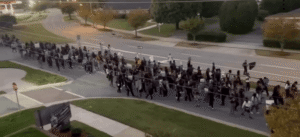
North Carolina A&T and UNC Greensboro; Students March 45 Minutes to Vote – In October 2026, more than 100 students from North Carolina A&T State University and the University of North Carolina at Greensboro marched to an off-campus polling location after election officials declined to provide early voting sites at their universities. Both campuses had hosted early voting during the 2024 presidential election, but the Guilford County Board of Elections approved a plan excluding campus locations for the 2026 midterms. On October 15, the first day of early voting, students from North Carolina A&T walked approximately 45 minutes to the Union Square voting location in Greensboro, with temperatures reaching approximately 85 degrees. Some sections of the route had missing or obstructed sidewalks, reportedly forcing students into the street. The demonstration also involved students from Bennett College and drew attention to the difficulties faced by students without transportation. Although election officials noted that these campuses had not historically hosted early voting during midterm elections, students argued that rejecting accessible polling locations imposed unnecessary burdens on their participation. The demonstration became a prominent example of young adults organizing to overcome government decisions that made voting less convenient.
Western Carolina University; Removal of a Previously Established Early Voting Location – In January 2026, the North Carolina State Board of Elections rejected plans that would have maintained an early voting location at Western Carolina University for the March primary election. Unlike some other universities involved in the controversy, Western Carolina had regularly hosted early voting since 2016, making the decision a removal of an established voting opportunity rather than simply the rejection of a new site. Students and the College Democrats of North Carolina filed a federal lawsuit challenging the decisions affecting Western Carolina, North Carolina A&T, and UNC Greensboro. They argued that the restrictions disproportionately burdened younger voters, particularly those without reliable transportation. However, a federal judge denied their request for a preliminary injunction in February, concluding that the plaintiffs had not demonstrated sufficient grounds for emergency relief and expressing concerns about changing polling arrangements shortly before the election. The ruling did not establish that campus voting restrictions were generally lawful in every circumstance, but it allowed the disputed arrangements to remain in place for the primary.
Texas; Nearly 600,000 Voter Registration Records Delayed by Government Computer Failures – In October 2026, Texas election officials faced a major controversy after a software failure prevented hundreds of thousands of voter registration records and updates from being transmitted to county election administrators. The problem involved the Texas Department of Public Safety’s driver’s license system and affected records dating back to October 2025. Some applicants had received confirmation receipts despite their information not being properly transmitted, leaving them potentially unaware of problems with their registrations. Voting-rights organizations estimated that approximately 593,000 records were affected and filed a lawsuit against state officials, arguing that Texas had failed to maintain an effective voter registration system. The failure was particularly concerning for young adults because driver’s license agencies are one of the most common ways they register to vote. On October 16, state officials announced that counties had cleared the original backlog, but a separate technical problem involving approximately 15,000 additional registration records was subsequently reported. These failures exposed how government administrative errors can jeopardize access to voting even when citizens follow the required registration procedures.
Virginia; College Students’ Registrations Rejected Over Dormitory Address Technicalities – In Virginia, election officials rejected voter registration applications from college students because they omitted unnecessary information about their university housing, including dormitory room numbers and campus mailbox numbers. The restrictions affected students attending several universities, including historically Black institutions such as Norfolk State University and Virginia State University. Civil rights organizations argued that eligible students were being excluded from voter rolls despite providing sufficient information to establish their eligibility and determine their appropriate precincts. In 2025, the NAACP Virginia State Conference and Advancement Project filed a lawsuit challenging these practices. On June 4, 2026, a federal judge approved a consent decree requiring Virginia officials to stop rejecting otherwise eligible student applications over immaterial omissions. The agreement also required changes to voter registration forms, additional training for election officials, and regulatory efforts to prevent similar problems. The case demonstrated how unnecessary bureaucratic requirements had prevented college students from registering and how legal action was necessary to secure reforms before the 2026 midterms.
New Hampshire; State Eliminates Student IDs as Standard Voting Identification – In June 2026, Republican Governor Kelly Ayotte signed House Bill 323, removing student identification cards issued by high schools and colleges from the forms of photo identification expressly accepted for voting in New Hampshire. Student IDs had previously been recognized under state law, allowing eligible young voters to use identification already provided by their educational institutions. Voting-rights organizations challenged the new restriction, arguing that it disproportionately burdened young people who lacked driver’s licenses or other qualifying identification. On October 2, 2026, a federal judge declined to block the law itself but issued a partial injunction preventing election officials from categorically refusing to consider student IDs as supporting evidence under alternative identity-verification procedures. The court required the state to revise its guidance accordingly. Although students may still establish their identity through other methods, the law removed a familiar form of standard identification shortly before the 2026 midterms, forcing some young voters to navigate additional procedures.
New Hampshire; Restrictive Proof of Citizenship Requirement – New Hampshire also faced a separate legal controversy involving House Bill 1569, a voter registration law enacted in 2024 that eliminated an affidavit-based option for proving U.S. citizenship. Under the restriction, first-time voters who lacked documents such as passports or birth certificates could be prevented from completing registration, even if they were otherwise eligible citizens. Voting-rights organizations, including the ACLU of New Hampshire and New Hampshire Youth Movement, challenged the law. In May 2026, federal Judge Samantha Elliott ruled that eliminating the sworn affidavit option imposed unconstitutional burdens on eligible voters, restoring the ability to attest to citizenship under penalty of law. The decision was particularly relevant to young adults registering for the first time, who may not have immediate access to citizenship documents. Other identification and domicile documentation requirements remained in effect, and the state announced plans to appeal. The case illustrated how documentary registration requirements can exclude eligible voters and require litigation to restore more accessible procedures.
Federal Government; Restrictions on Work-Study Funding for Campus Voter Registration – In August 2025, the U.S. Department of Education rescinded previous guidance allowing universities to use federal work-study funds for certain election-related activities, including nonpartisan voter registration assistance. The department determined that these activities constituted political activity and should not be funded through the federal work-study program. The new guidance prohibited using those funds to employ students in activities such as voter registration, distributing registration forms, voter assistance, and serving as poll workers. Department officials defended the change by arguing that federal work-study funding should focus on employment and professional development rather than political activities. However, restricting funding for nonpartisan voter registration assistance also removed a resource that universities could previously use to support student participation. Although universities and student organizations remain free to conduct lawful voter registration drives using other resources, the policy limited one method of providing accessible registration assistance to young adults ahead of the 2026 midterms.
Texas; Attempt to Eliminate College Campus Polling Locations in Tarrant County – In September 2024, Republican Tarrant County Judge Tim O’Hare proposed eliminating several early voting locations at college campuses, including sites at the University of Texas at Arlington and Tarrant County College. O’Hare defended the proposal by arguing that the locations had relatively low turnout, were costly to operate, and presented accessibility concerns for other voters. However, students, voting-rights advocates, and Democratic officials criticized the proposal as an attempt to discourage young voters, particularly those more likely to support Democratic candidates. Following public opposition, the Tarrant County Commissioners Court voted 4–1 to preserve the campus polling locations and add another site. The controversy became even more significant after The Texas Tribune reported that the Tarrant County Republican Party criticized Republican commissioners who opposed the removals, arguing that preserving the locations undermined the party’s ability to win elections. Although the polling places ultimately remained open, the incident demonstrated how campus voting access can become entangled with partisan electoral interests.
Texas; Student IDs Excluded While Handgun Licenses Accepted for Voting – In 2011, Republican Governor Rick Perry signed Senate Bill 14, establishing stricter photo identification requirements for voting in Texas. The law excluded college and university student identification cards from its list of acceptable photo IDs while recognizing concealed handgun licenses. This distinction attracted criticism from voting-rights advocates because college students and younger voters have historically been more likely to support Democratic candidates, while firearm ownership is more prevalent among Republicans. The original legislation became the subject of major litigation in Veasey v. Abbott, in which plaintiffs argued that the law disproportionately burdened Black and Hispanic voters. A federal district court initially found that the law had been enacted with racially discriminatory intent, and the Fifth Circuit subsequently upheld a finding that its discriminatory effects violated the Voting Rights Act while overturning the initial discriminatory-intent determination. Texas later enacted Senate Bill 5 in 2017, creating alternative identification procedures for voters who could not reasonably obtain an accepted photo ID. In 2018, the Fifth Circuit upheld the revised procedures. Nevertheless, college student IDs remain excluded from Texas’s standard accepted photo identification list, while state-issued handgun licenses continue to qualify.
Wisconsin; Special Identification Requirements for College Students – Wisconsin has long imposed special requirements on college-issued identification cards used for voting. Although the state permits qualifying student IDs, they must contain particular information, including an issuance date, an expiration date no more than two years after issuance, and a signature. Ordinary university identification cards frequently do not satisfy these standards, meaning students may need to obtain separate voter identification cards from their universities. This has created confusion among students who reasonably expect their college photo IDs to be accepted at polling locations. Voting-rights advocates have criticized the restrictions as unnecessary obstacles to younger voters, particularly those who do not have driver’s licenses or other accepted identification. At the University of Wisconsin–Madison, for example, students can obtain a special university-issued voter ID to meet state requirements. Although Wisconsin does not categorically prohibit student IDs, its requirements demonstrate how governments can create additional administrative burdens for young voters while technically permitting campus identification.
Florida; Statewide Prohibition on Campus Early Voting – For several years, Florida election officials interpreted state law as prohibiting early voting locations at facilities associated with colleges and universities. The restriction prevented approximately 830,000 students enrolled at public colleges and universities from accessing on-campus early voting opportunities. In 2018, voting-rights organizations and students challenged the policy in federal court, arguing that it discriminated against younger voters and imposed unnecessary burdens on college communities. In July 2018, a federal judge issued a preliminary injunction blocking the restriction, finding that the policy violated constitutional protections under the First, Fourteenth, and Twenty-Sixth Amendments. The case was especially significant because the court recognized the discriminatory consequences of categorically excluding college campuses from potential early voting locations. In 2020, Florida officials reached a settlement formally clarifying that county election supervisors could establish early voting sites on university campuses. The controversy demonstrated that college voting restrictions can cross constitutional boundaries when they single out locations associated with younger voters.
Prairie View A&M University; Students Challenge Limited Early Voting Access – In 2018, students at Prairie View A&M University, a historically Black university in Waller County, Texas, filed a federal lawsuit challenging the county’s early voting arrangements. The county had not scheduled any early voting location on campus or elsewhere in Prairie View during the first week of early voting, while several other communities received more extensive voting opportunities. Students argued that the restrictions disproportionately disadvantaged Black college students, many of whom lacked personal transportation. Following the lawsuit, county officials expanded voting hours on campus and added Sunday voting at Prairie View City Hall. However, in March 2022, a federal judge ruled that the county had not violated federal voting protections, concluding that its voting arrangements had been based on reasonable administrative considerations rather than unlawful discrimination. Despite the outcome, the case drew attention to Waller County’s longer history of disputes over voting access for Prairie View students and the practical challenges created when voting opportunities are limited near university campuses.