
There is a large number of queer adolescents and youth in the United States, many of whom are supported by their families, but also many who are oppressed by their parental figures in their own homes. In data reported in September 2020 by the Youth Risk Behavior Surveillance Survey, there are over 2 million adolescents aged 13 to 17 that identify as LGBTQ+. However, many of the queer adolescents in this number experience parental oppression, discrimination and rejection against their queer identity daily.
Parental discrimination against queer identity in youth can be caused for a number of reasons. Some of these reasons include religious dogma and scriptural interpretation, political indoctrination of conservative ideas, cultural beliefs that view queer identity as corrupt, fear of social ostracization, and more. Parental oppression against queer identity in youth can lead to many consequences for an adolescent’s mental health. Things like continuous misgendering of an adolescent’s current gender identity, intentionally using the previous name they went by to cause psychological harm (deadnaming), making the adolescent feel responsible for “breaking” a family unit, and restricting their access to support for their identity can do serious damage to an adolescent’s mental image of themselves and their overall mental wellness.
Along with this, parents may become abusive towards their children after learning that they have an LGBTQ identity. Parents have been known to react with kicking children out of their homes, extreme isolation, severe beatings, forcible institution into “Conversion Therapy”, and even torture and murder of their queer children. This behavior has been known to cause devestating consequences on the mental health of youth, and has even resulted in the suicide of queer children.
Queer adolescents and youth deserve the right to freely express themselves and identify as any gender or sexual orientation they would like to in the protection of their own homes. Teens and adolescents who live with oppressive parental figures or live in homes that have strict and unjust guidelines like these are fully entitled to having a safe environment that does not shatter their true identities or mental health. In many cases, parental oppression against queer identity can become abusive when it constantly breaks down on a child’s psychological health.
In this webpage, the National Youth Rights Association explains types and causes of parental oppression against queer youth, the harms and negative impacts of parental oppression against queer identity research into the effects of this oppression, and state laws on what a parent/child can or cannot do with queer identity and physical autonomy, and self-reported stories about parental oppression against queer identity.
Table of Contents
- Types and Causes of Parental Oppression Against Queer Youth
- Harms of Parental Oppression Against Queer Youth
- Research on the Effects of Parental Oppression and Queer Youth Identity
- State Laws on Parental Oppression and Queer Youth Identity
- Cases of Child Abuse Resulting from Queer Identities
- Cases of Harmful Parental Discrimination Against Their Child’s Queer Identity
- Social Media Self Reported Stories of Parental Oppression against Queer Identity
The National Youth Rights Association
If you’re interested in Youth Rights, consider volunteering with us. We are always looking for new members and would love to have you on board. If you have a personal story to share, of being a victim of parental discrimination against queer identity, or about a general youth rights violation, consider sending us an email at nyra@youthrights.org. We’d love to help get your story out to the world.
Types of Parental Oppression Against Queer Youth
Insults or calling a child insulting names – One common form abuse takes as parental oppression against queer identity is a parent calling their child slurs, names, and other demeaning terms relating to their queer identity. For example, it can come in the form of name-calling mixed with derogatory terms applied to LGBTQ+ identities. It can also be in the form of saying things like “You are an embarrassment to this family.” Or “You disappoint me.” Comparing a child to their siblings, cousins, or other family members who identify as straight and/or cisgender and glorifying that family member/telling the child to be like them also severely impacts a queer adolescent’s mental health. Rejection of a child’s identity can also come in verbal forms. It can be phrases such as “I will never accept you for who you are.” Or “You’re not normal.” In households, where rules are defined by culture and religion, insults can also be culturally/religiously respective to a parent’s belief. There are also other forms of verbal abuse towards queer teens, such as shaming, teasing, projecting potential futures if the child was not queer, and more.
Using religion and culture against them – One of the reasons why parents oppress their queer adolescents is because of strict beliefs in their own religion and culture. Parents can refuse to let their children date their preferred member, receive gender-affirming care, use correct pronouns, etc. Because of this. A phrase a parent might say is “It’s a sin to be like this.” Or “In our culture, this is not allowed.” In some cases, a queer adolescent might know this and already feel feelings of guilt or shame with their sexual orientation or gender identity. This constant suppression can build up these feelings and seriously negatively impact a child’s mental health.
Denying a child’s queer identity and their own words – Another form of parental oppression against queer identity is denying that a child is LGBTQ+. Some parents don’t believe what their queer adolescent identifies themselves as, often resorting to phrases “It’s just a phase.”, “you’re too young to think that”, or “you’ll grow out of it when you’re older.” The constant denial of an adolescent’s sexual or gender identity also tends to lead to denying other things such as using their preferred pronouns and name, purchasing items that can affirm their gender identity such as binders and testosterone/estrogen, letting their children be romantically involved with the gender(s) they are attracted to, and more. This can negatively impact their mental health, as this causes suppression of their true identity, gender dysphoria, and more. As a parent, it is important to recognize and safely talk about problems or general things about the gender or sexuality they identify with, instead of constantly suppressing them and risking negative consequences on their mental health.
Deliberately using incorrect names and pronouns – As mentioned before, parents who suppress queer identity in their children may also use incorrect names and pronouns. A queer adolescent may want to go by a name that differs from their original name to affirm their current gender identity, and they also may want to use different pronouns as well. Parents who try to suppress this identity may deliberately ignore these boundaries and rules their child sets in order to force their child to use their original identity, simply dismiss it because they don’t believe in the way their child identifies as, and more.
Conversion therapy – In some cases, parents who wish to suppress their child’s queer identity take them to conversion therapy. Conversion therapy is a highly harmful, discredited, and scientifically unproven practice that is aimed at changing a person’s sexual orientation and/or gender identity. Gender identity and sexual orientation is a natural part of human development that cannot be strictly changed. Conversion therapy can damage a child’s mental health, giving them internalized homophobia, severe depression, and anxiety. This is because conversion therapy systematically breaks down an individual’s self worth by using psychological pressure to reject their identity, forcing an individual to change themselves. This is through making them feel internalized shame and self-hatred, teaching them to constantly suppress and fear their natural feelings, forcing an individual to choose between their authentic identity or faith/culture, and more. Conversion therapy also risks a child’s relationships with their family, and threatens the risk of losing their community because they are disconnected from both their faith community and LGBTQ+ support spaces.
Excluding queer experiences from family life – Some parents may exclude queer experiences from their daily lives to suppress their child’s queer identity to show their child they are alone. They also may exclude queer experiences because they do not want their child to be exposed to queer media and get influenced by that. Parents may avoid discussion of LGBTQ+ topics, limit media such as books, TV shows, and movies that portray LGBTQ+ characters, refuse to let them explore their queer identity further with other queer peers and online, and more. It is important for queer adolescents to explore their identity in this stage of life, and suppressing queer identity this way will not completely stop the way a teen identifies as or feels.
Conditional love, inheritance, permission, freedom, etc. – Parents who suppress queer identity in their children may make things such as love, freedom, inheritance, money, and other things conditional to make their child change their gender identity to receive these things. For example, parents may make affection, attention, or approval conditional and say things like “We will love you if you change.” They may also limit social interactions, take away belongings, cut off financial support, refuse to purchase their child certain things, and more and claim that they will give their child these things if they change their gender identity to what their parents approve of.
Restricting self-expression around queer identities — Another form of parental discrimination against queer identity is restricting a child’s ability to express that identity in everyday life. This can include banning clothing, hairstyles, makeup, jewelry, pride symbols, binders, pronoun pins, or other forms of expression that help the child feel visible and authentic. It can also include forbidding the child from talking about their identity, stopping them from joining LGBTQ-related groups, preventing them from attending affirming events, or punishing them for acting in ways the parent sees as too masculine, too feminine, or otherwise too queer. In these situations, the parent is not just disagreeing with the child’s identity. They are trying to suppress any outward sign of it and force the child to present in a way that feels acceptable to the parent. This can be deeply harmful because it teaches the child that authenticity is unsafe, that being seen as themselves will lead to punishment, and that love or safety depends on performing a false version of who they are. Over time, that can contribute to shame, emotional suppression, identity confusion, and a deep fear of being open about who they are.
Disowning children – One of the most severe forms of parental discrimination against queer identity is disowning a child because they are LGBTQ+. This can happen explicitly, such as telling the child they are no longer part of the family, forcing them to leave the home, refusing contact, cutting off financial support, or telling relatives to treat the child as though they no longer exist. It can also happen in more indirect ways, such as making it clear that the child’s place in the family depends on hiding or changing their identity. Disownment is especially harmful because it attacks one of the most basic things a child depends on: the feeling that they belong somewhere and will not be abandoned by the people responsible for caring for them. When a child is disowned because of their queer identity, the message they receive is not just that their parents disagree with them, but that being who they are is enough to cost them family, home, safety, and love. This can lead to severe emotional harm, fear, instability, homelessness risk, and long-term trauma around attachment and trust.
Child Abuse due to Queerness – In some cases, parental discrimination against queer identity escalates beyond rejection and suppression into direct child abuse. This can include physical abuse, emotional abuse, verbal degradation, threats, humiliation, excessive punishment, forced isolation, invasion of privacy, deprivation of freedoms, or other cruelty specifically tied to the child being LGBTQ+. For example, a parent may hit a child after discovering they are queer, punish them more harshly for same-gender relationships or gender nonconformity, call them slurs, destroy affirming belongings, monitor them obsessively, or use fear and intimidation to force them to hide who they are. In these situations, the child is not simply dealing with disapproval. They are being actively harmed because of their identity. This kind of abuse can have especially severe mental-health effects because it teaches the child that authenticity is dangerous and that being open about who they are will lead to pain, rejection, or violence. Over time, that can contribute to depression, anxiety, self-hatred, suicidal thoughts, and deep fear of ever being fully known or accepted.
This is not the exhaustive list of all ways parents may suppress their child’s queer identity, but these are a few examples of how this happens within homes and communities.
Harms of Parental Oppression Against Queer Youth
Depression and anxiety – According to research from the Family Acceptance Project, queer youth who experience parental rejection are more likely to report depression and anxiety compared to those with supportive families. This is for many reasons. One of them is loss of basic safety in a queer adolescent’s home, as they can experience chronic stress from facing constant criticism or being lashed out at by parents. Parental rejection and oppression can also lead to damaged self-worth, because rejection from the parents signals that they are “fundamentally flawed.” Internalized stigma and identity concealment also comes from parental oppression of queer identity, which mentally exhausting on youth when they hide their true selves. Parental rejection and oppression can also cut queer youth from receiving outside support from other queer peers and communities to prevent influence. This can cause a queer adolescent to navigate their complex emotions alone in the dark with little to no help. There are many other reasons why parental oppression against queer identity can elevate depression and anxiety, but these are just few of many.
Increased suicide rates and attempts – Along with queer adolescents with oppressive parents experiencing higher rates of depression and anxiety symptoms, they also are recorded to have increased suicide risk, according to The 2025 Trevor Project’s National Surveys on LGBTQ+ Youth Mental Health. There are many reasons as to why this can happen, one of them being substantial stress on minorities such as LGBTQ+ individuals. LGBTQ+ individuals already face stressors such as discrimination, victimization, and hate criming. When adding parental oppression/rejection, depression, anxiety, and other stressors, it can push queer adolescents past their emotional coping limits and start to seek a solution to end all of the pain. Additionally, when queer adolescents are rejected by their own family, it can bring a sense of isolation and exclusion that makes them feel as if they do not belong anywhere. Struggling home environments where a parent rejects a child’s identity can also make them feel hopeless and unable to envision a future where they are safe and accepted. This is also a major driver of suicidal ideation.
Emotional exhaustion – For queer adolescents, living under constant stress in a home environment that does not accept them for who they are, forces them to hide their true identity, or suppresses their emotions is an emotionally exhaustive thing. This leads to a queer adolescent bottling up their emotions and desire to identify as what they truly want inside, leading to emotional exhaustion, symptoms of depression and anxiety, and more.
Unhealthy coping mechanisms for stress – In some cases, since queer adolescents who live in rejecting environments have higher symptoms of depression and anxiety, queer adolescents turn to unhealthy coping mechanisms for stress such as self harm, substance abuse, alcohol abuse, etc. Longitudinal work and surveys by The Trevor Project, specifically a report titled Substance Use, Minority Stress, and Mental Health among LGBTQ+ Young People, found that 54% of LGBTQ+ youth currently use at least one substance like alcohol, marijuana, vapes, etc. to cope. Youth who experience identity-based victimization and/or discrimination in general and their homes report significantly higher rates of substance use than those who did not face rejection in their family. Using unhealthy coping mechanisms like these are a common way to relieve feelings when the stress and hurt becomes unbearable to export in healthy ways.
Damage to the child’s sense of autonomy – Self-autonomy has a lot to do with what a person wishes to do with their body and identity. Queer adolescents with oppressive parents are restricted to these things. Rejection of identity can make a queer adolescent feel that they have to be a certain identity to fit in or be accepted, whether that be heterosexual, their assigned gender at birth, or others. However, if a queer adolescent is forced to identify a certain way by their parents and family, they are blocked from having the autonomy to choose whatever they wish to identify as. Additionally, when queer adolescents wish to identify as a certain gender, they can also choose certain ways and modifications to affirm their identity, such as testosterone/estrogen, binders, their style of dress, personality, and more. An oppressive parent may not allow their child to receive these things, restrict the clothes they wear, or force them to act a certain way, which ultimately reduces a child’s sense of self-autonomy.
Impaired identity development – Along with damaged self-autonomy, oppressive parents against queer identity can impair their child’s identity development. This is because these parents may not allow resources for self-exploration, ways adolescents can reach out to queer communities, or discussion of their child’s identity. In adolescence, individuals explore their identity, delving into different sexual orientations and gender identities. It is important for children to explore their identity safely without anything blocking this important part of development, and parental oppression of queer identity can lead to underdeveloped identity and unsureness later on in life.
Social isolation and weakened peer relationships – Many queer adolescents may also be connected to other queer adolescents and communities that safely accept them for who they are. When oppressive parents find out that their child is queer, they may try to limit things that can influence their identity, including their access to queer communities and peers. This can force a queer adolescent into social isolation, as well as weakening their relationships with their peers. Additionally, depression and anxiety that is derived from an oppressive home life can also lead a queer adolescent to isolate themselves from the rest of their peers as well.
Difficulty opening up to others – Children whose parents constantly reject and oppress their identity can also have difficulty opening up to others about their identity. Parental rejection often consists of shaming that leads a child to have internalized homophobia, low self-esteem/self-worth, and feelings of shame that can suppress a queer adolescent’s ability to open up to others. This can lead the child to not accepting themselves and unable to freely talk about their identity with others. In many cases, this is called “closeting,” which is when an individual keeps their sexual orientation or gender identity a secret due to fear of discrimination and stigma.
Increased conflict and resentment towards parents – A common consequence of constant parental rejection and oppression towards queer identity is conflict and resentment towards parents. A queer adolescent might argue with their parents over using correct pronouns or names, ask them why they do certain things to reject their identity, etc. They may also resent them for not accepting who they are as a person as well as limiting the things they can or cannot do with their identity. There are many other reasons why a queer adolescent may start conflict or resentment towards their parents, and these are just a few reasons.
Research on the Effects of Parental Oppression and Queer Youth Identity
Overall, looking at the 2024 U.S. National Survey on the Mental Health of LGBTQ+ Young People reveals many things. This is a survey conducted by the Trevor Project that uncovers a significant association between anti-LGBTQ+ victimization and poor mental health. For example, 39% of LGBTQ+ youth seriously considered attempting suicide in the past year, along with 46% of transgender and nonbinary youth. Additionally 50% of LGBTQ+ youth who wanted mental health care in the past year were unable to receive it.
Though mental health problems in LGBTQ+ youth can be caused by a multitude of reasons, it is safe to say that by looking at research and studies from numerous mental health professionals, parental rejection and oppression is a cause of this. Firstly, there is an association between the prevalence of family physical abuse and queer identity in youth. A 2023 study published in the National Library of Medicine examines this. The study revealed that gender and sexual minority adolescents reported higher levels of family physical abuse compared to cisgender adolescents. This trend may be a reflection of lack of familial support of the adolescent’s gender identity, as well as higher family rejection.
To dive deeper into the effects of this, A 2009 study done by San Francisco State University found that there is a clear link between rejecting behaviors of families towards lesbian, gay, and bisexual adolescents and negative health outcomes in early adulthood. The study found that LGB young adults who reported family rejection in adolescence were 8.4 times more likely to report attempting suicide, 3.4 times more likely to use illegal drugs, 5.9 times more likely to report higher levels of depression, and 3.4 times more likely to report having engaged in unprotected sexual intercourse compared to peers from families that reported little to no levels of family rejection.
Additionally, research is done on the role of family support in mental health outcomes for LGBTQ+ youth. A cross-sectional, primary care-based study examines this. The research found that family support is a modifiable factor in preventing negative mental health outcomes. Parents discussing their queer teen’s strengths and listening to their feelings was protective for LGBTQ+ youth, and interventions to enhance family support and strengths-based communication are particularly effective methods of mitigating stress and poor mental health amongst LGBTQ+ youth.
However, many LGBTQ+ youth fare better in mental health, provided that they have support from their families. An article published in the National Library of Medicine analyzed the results of many studies. The article found that family acceptance may be protective for LGBTQ+ youth’s health. Family support and acceptance is associated with better general health status, less deppression, less suicidal ideation, less substance abuse, and greater-self esteem. Additionally, among transgender youth, parental support is protective against depression, and it is reported that family support is associated with a higher quality of life.
State Laws on Parental Oppression and Queer Youth Identity
Laws restricting gender-affirming care for minors – As of mid-2026, 27 states have enacted laws or policies that limit youth access to gender-affirming care. On June 18th, 2025, the U.S. Supreme Court ruled that the Tennessee law banning gender affirming care did not constitute as sex-based discrimination, therefore did not violate the U.S. Constitution’s 14th Amendment Equal Protection clause. Because of this, many bans in Tennessee stay in place. On the other hand, laws in Montana and Arkansas are being enjoined by court because they constitute as sex-based discrimination. However, many laws for banning gender-affirming care still stay in place. Many laws ban the prescribing or administering of testosterone/estrogen and performing surgical gender-affirming care, making it illegal for medical professionals and practitioners to give queer adolescents the gender affirmation they deserve. Parental oppression may also entail restricting gender-affirming care, and some states have already fed into that.
Parental rights and forced outing – Some states have enacted laws that require schools to notify parents and forcibly out students’ gender identities if they request name/pronoun changes. According to a publication by the UCLA School of Law, Montana, North Dakota, Tennessee, Texas, and West Virginia have enacted a pronoun law like this. For a specific gender identity, many states have laws around the forced outing of transgender youth. These laws report to parents if a transgender adolescent requests about their gender identity to school staff, if parents ask for information on their child’s gender identity, or like mentioned before, merely ask to be called another name or go by other pronouns. There are 15 states who have laws for this, according to Movement Advancement Project. Many queer adolescents do not wish for their parents to be involved or know about their gender identity, as parents can reject them and be against them. Queer youth should have the right to disclose information like this to their parents when they please, not be outed by environments where they should be protected and safe.
Content and curriculum restrictions – In some states, laws around LGBTQ+ youth and curriculum are more extreme. In Idaho, a law was signed in April 2026 to restrict conversations about gender identity between youth and trusted adults such as teachers, coaches, tutors, etc. as well as limit queer youth to seek out-of-state care. In Florida, there are laws that restrict classroom instruction on sexual orientation and gender identity. In Utah, a bill was passed in February 2024 that restricts teachers from having discussions about sexual orientation or gender identity to not “reconsider or change” a student’s beliefs. These are only a few of the many laws in states that are passed to prevent LGBTQ+ discussion in classrooms. Parental oppression can already limit a queer adolescent’s ability to reach out to queer communities, and laws like this can suppress a queer adolescent even more.
Cases of Child Abuse Resulting from Queer Identities
In the following video, NYRA member Bailey McCoy describes a situation where her friend was abused emotionally and physically by his mother due to his transgender identity, and the abuse was ultimately ignored by CPS.
According to Bailey’s story, her friend was subject to constant emotional and physical abuse at the hands of his mother, due to her hostility towards his gender identity. This culminated in incidents where she would physically strike him, one time hitting him in the head with a roll of wrapping paper. The police were called and child abuse were reported, but when they arrived and the situation was explained, they took the side of the mother, and berated the child for attempting to seek help. But this wasn’t the end of the situation, after the police had left, the mother continued to treat the child worse, berate him and punish him for attempting to get help.
Along with this, when Bailey’s friend compiled a list of abusive incidents by his mother, and gave it to Bailey to contact child protective services, this didn’t end much better. According to Bailey, all CPS did was have one conversation with him at school, then refused to follow up, never even opening an investigation into the abuse that was occurring. In this situation, both the police, and child protective services didn’t take the concerns of the child seriously, despite clear issues being present and him even stating that he’d prefer to run away rather than continue living with his abusive mother.
Leelah Alcorn; Suicide Victim — Leelah Alcorn was a transgender teenager in Ohio whose story became one of the most widely known examples of parental rejection of a child’s LGBTQ identity. After she came out to her parents, she wrote that they responded by telling her it was a phase, that she would never truly be a girl, and that “God doesn’t make mistakes.” According to reporting on her suicide note, her parents then sent her to Christian therapists intended to change her and later isolated her from friends and support. Before her death at 17, Leelah wrote that the rejection and forced treatment deepened her depression and hopelessness. Her story became a national symbol of how parental anti-LGBTQ rejection can turn into profound psychological harm.
A.C. — In Indiana, a transgender 16-year-old identified in court records as A.C. was removed from the home after the state received reports of abuse tied to the teen’s gender identity. According to reporting on the appellate decision, the case began after allegations that A.C.’s mother was verbally and emotionally abusing the teen by using rude and demeaning language about A.C.’s transgender identity. The reporting also said A.C. had thoughts of self-harm and that the court found removal from the home was in the teen’s best interest because of the parents’ inability, refusal, or neglect to provide proper care and supervision. This case is significant because it shows a court explicitly treating anti-trans parental conduct as abuse serious enough to justify taking the child out of the home.
Alexis “Alex” Cooper — Alexis Cooper told People that when she was 15 and her Mormon parents learned she was gay, their response was immediate and extreme. She said they drove her to a Utah facility and left her there for what became eight months of conversion therapy, despite her crying and begging not to be abandoned there. Cooper later described the experience as so traumatic that she “wanted to die.” Her story is a stark example of parents responding to a child’s sexual orientation not with support, but with forced confinement and abusive efforts to change who she was.
Jesse — In Them’s reporting on corporal punishment and LGBTQ youth, Jesse, a gay and nonbinary survivor from an evangelical community, described being beaten by their father and said the violence escalated when they came out. Jesse said that on the night they told their dad they were gay, the situation turned into a physical altercation in which their father beat them severely enough to leave them with a black eye and a busted lip. Their story is especially striking because it shows how parental violence can become more severe when a child’s LGBTQ identity becomes explicit.
D — The same Them investigation included the story of D, who is gay and trans and described physical punishment in a fanatically religious home where anything seen as “against God” could be treated as something to beat out of a child. D said punishments were often mixed with humiliation, including being forced to wear a baseball cap labeled “liar” in public for a week. He described a home where queer identity and gender nonconformity were treated as moral corruption to be punished, showing how anti-LGBTQ parental abuse can involve not just physical violence but public shaming and constant social degradation.
Anthony Avalos — Anthony Avalos, a 10-year-old boy in California, was reported by relatives and others to have recently come out as gay before his death. People reported that court documents described him as having been tortured for days before he was found unresponsive at home, and the article specifically noted allegations that he had been beaten and abused after coming out. His case is one of the most horrific reported examples of a child allegedly suffering extreme abuse in a family environment where his sexual orientation was part of the cruelty directed at him.
Cases of Harmful Parental Discrimination Against Their Child’s Queer Identity
Mordechai Levovitz — Mordechai Levovitz told ABC News that his parents first sent him to a therapist at age 4 because they were alarmed that he said he wanted to be a girl and liked “girly” things. He said that after the family moved, they continued taking him to therapists who tried to explain and correct his femininity and presumed homosexuality. In the ABC interview, Levovitz described being taught that something was wrong with him and said he was still dealing with the trauma and shame years later. His story is a clear example of parents responding to a child’s gender nonconformity and queer identity with attempted “correction” rather than support, leaving long-term emotional damage behind.
Andrew — In a Trevor Project survivor account, Andrew said he came out to his parents at 14 and was met not with acceptance, but with conversion therapy. He said his parents arranged for him to see a therapist who promised to “fix” his sexual orientation, and he went along with it because he believed being straight was the only way to keep their love and acceptance. Andrew later said the experience taught him “learned self-hate” and left him feeling that there was something wrong with him for having same-sex thoughts. His story shows how parental discrimination does not always look like open screaming or expulsion from the home. It can also take the form of a parent outsourcing rejection to a therapist and calling it help.
Lucas Greenfield and another teen featured by ABC News — In its “A Boy Named Lucas” series, ABC News reported on two gay teens who said their parents forced them into programs meant to change their sexual orientation. The framing of the series itself makes clear that these were not voluntary choices by the teenagers, but efforts driven by parents who treated being gay as something that had to be corrected. Even without the full transcript in the clip page, the story is significant because it documents a pattern seen in many LGBTQ youth accounts: parents responding to a child’s sexual orientation with coercive removal and forced treatment rather than acceptance.
Julie Rodgers — Reporting on Juile’s memoir explains that she spent years in the conversion-therapy movement and became one of its public faces before ultimately breaking away. Her account shows how parental and religious rejection can funnel a queer child into an environment where self-erasure is presented as faithfulness and survival. The damage in stories like hers is not just the message that same-sex attraction is wrong, but the pressure to build an entire adolescence around denying who you are in order to remain loved and accepted.
Jeff McLean — Jeff McLean’s memoir, as described by People, centers his experience growing up gay in a devout Mormon household. The article frames the book as the story of a son seeking love and faith while his father struggled to reconcile church beliefs with his son’s sexuality. While this case is not presented as extreme in the same way as forced conversion therapy stories, it still fits the broader pattern of parental discrimination against a child’s LGBTQ identity: a child growing up in a family and faith environment where being gay created tension, struggle, and the fear of losing parental acceptance. His story is useful because it shows that anti-LGBTQ parental harm is not always dramatic in one moment; sometimes it is a prolonged childhood of conditional acceptance, confusion, and pressure to fit a role the parent or religion finds more acceptable.
Social Media Self Reported Stories of Parental Oppression against Queer Identity
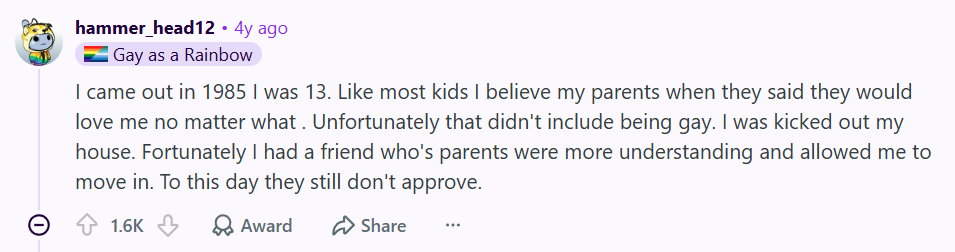
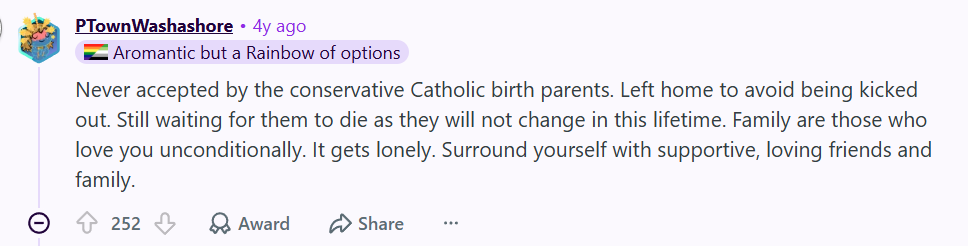
Reddit posters whose parents did not accept them – In a thread in r/lgbt, there are many accounts and personal stories where parents have oppressed or rejected their queer child. Many of these posts are heartwarming, however, there are also a lot of posts where people have been kicked out of the house for simply being gay. Other commenters report that their family did not accept their identity because of religious and cultural reasons. Kicking children out of the house simply for their gender identity or sexual orientation is a common form of oppression and rejection, as they are not allowed to freely develop their identity in the safety of their own homes.
Reddit poster whose parents threaten to disown them for being queer – In this reddit thread with a queer adolescent needing advice, their parents threatened to disown them because their parents saw them with their girlfriend. The poster comes from a small Christian town in Norway, where Christian cultural and societal norms are heavily enforced and LGBTQ+ views are frowned upon. The poster’s parents responded rather dramatically when finding out the poster was queer, and threatened to disown them if they did not “seek forgiveness from God.” This is a common case of parental oppression and rejection, as many parents are homophobic and do not want their children to be queer because of religious views. In some religions, LGBTQ+ is frowned upon and seen as a sin, similarly to how the poster’s religion and family views are.
Reddit poster who is a transgender child in a transphobic household — In this Reddit thread in r/lgbt, a transgender minor posts about their oppressive experience in their transphobic household. The poster has posted about this before, but expresses that their parents’ transphobic actions are becoming worse. The poster explains that their father is encouraging their mother to forcefully put makeup on them and pressuring them to dress more like a woman. This actively goes against their gender identity, and makes the poster feel more gender dysphoria. The poster closes off with the only option being suicide. This self-reported story displays how far parental oppression can go and how it can lead queer adolescents into poor mental health and quality of life.
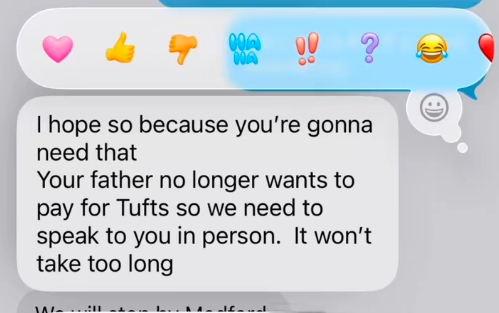
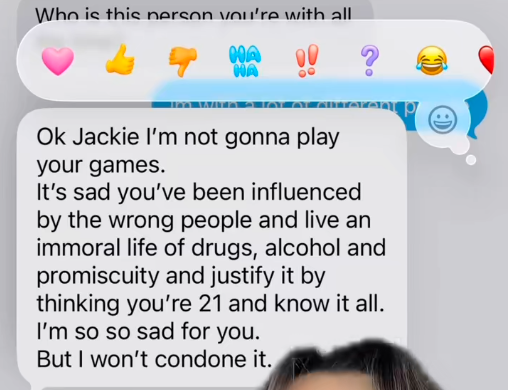
TikToker who came out to homophobic parents and was disowned — In this self-reported TikTok, the poster explained that they are queer but their parents are homophobic. The poster wrote a note explaining their queer identity and gave it to them, and their parents reached out days later with only negativity. Their parents said they were disowning the poster, would stop assisting with their rent, college, and phone bill, and even stole $1,000 from them. They also explain that this is a supposed act of “Christian love” in a sarcastic manner. The poster showed some text messages between them and their parents explaining they will not pay for college, and are sad that the poster lives an “immoral life.”