
Most people are familiar with the “school to prison pipeline,” the collection of systemic practices and policies that funnel young people directly from the public education system into the prison system. Many studies have been conducted and papers published about how marginalized young people are negatively impacted by this pipeline. Recent publications have gone even farther, and a growing body of research now argues that the American public school system is not just a pipeline to carceral institutions, but is in fact a carceral institution itself.
The term carceral denotes a practice or institution that functions as an extension of the prison system or is prison-like in its operation. The carceral system in the United States extends past the prison walls and shapes many of our social systems, leading many scholars to deem the country as a whole a carceral state. Aspects of the carceral state that are most harmful to young people include the child welfare system, the juvenile justice system, and school policing. Amongst these institutions, the school system impacts the greatest number of young people, and is often the primary carceral system used to police them.
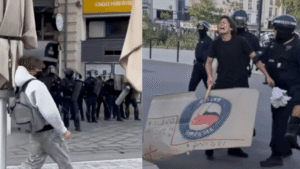
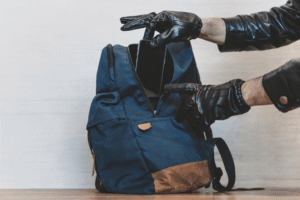
In an attempt to reduce the risk of violence, the public education system has increasingly implemented methods of crime control to manage its students. Violence prevention strategies like metal detectors, surveillance cameras, and strict policing of students divert funding and resources away from evidence-based and student focused strategies like peer mediation, student mentoring, and school social workers and mental health professionals. Students have been detained, physically assaulted and traumatized by the very police and school resource officers who are ostensibly there to ensure their safety. Common punitive strategies such as school suspension can be associated with higher risk of incarceration in the future, and some strategies like “in school suspension” or exclusion rooms are modeled after solitary confinement. Just as people of color are at increased risk of harm within the prison system, students of color are at increased risk of harm in the education system.
The Carceral State of American Schools: The Impact of Symbolic Threat of Public School Policy investigates the link between authoritative behavioral control policies and student body diversity. The study hypothesizes that schools with higher levels of racial diversity in their student body will implement more punitive behavior management strategies than schools with lower levels of diversity. Their results confirm that schools with greater racial diversity also have more restrictive school access, but not necessarily more punitive policies. In explaining this discrepancy, the authors suggest that punitive practices are built into the education system as whole, not motivated by supposed criminality of a given student population. Beyond that, the data reveals a wide array of variables associated with carceral security practices, including high percentages of non-English proficient students, higher enrollment rates, and rural settings. The study references Hirshfield’s assertion in his 2008 paper on the criminalization of school discipline that the school environment serves a penological rather than an educational purpose. This concept has a rapidly growing body of evidence behind it today.
A dissertation published in 2024 by the University of Washington further outlines the carceral nature of the schools system. Carceral Structures in Schools and the Carceral Continuum focuses on carceral cultures across a nationally representative sample of schools. Its thesis further underlines the relationship that factors such as urbanicity, school size, and racial demographics have with carceral school structures. It also centers the topic of the carceral continuum, a concept which links all of the disparate state institutions and practices that make up a carceral state, and identifies the school system as yet another manifestation of this carceral apparatus.
The author uses the implementation of zero tolerance policies, in or out of school suspensions, and alternative, non-carceral methods, such as restorative justice. Zero tolerance policies have been demonstrated to increase the risk of repeat suspensions, poor academic performance, and the chances that a student will drop out of school, while having an insignificant effect on the behaviors they’re meant to curtail. Out of school suspensions have garnered critique for raising dropout rates and lowering academic performance, and suspension and expulsion has been shown to have negative mental health consequences in the long term. This has resulted in schools increasingly turning towards in-school suspension methods as a solution. These exclusionary practices start in elementary school and disproportionately affect students of color and disabled students.
While there was a surge of concern about suspensions and exclusionary discipline methods during the Obama administration, the Department of Education failed to ever fully displace these practices from the school system. Since Obama’s original push to address the issue in 2014, there has been mounting evidence that in-school suspension practices, rather than being a preferable alternative to traditional out of school suspension, may increase the risk of anxiety and depression in young people. Some schools on an individual basis have made a push towards restorative justice, but without addressing the underlying social biases of adults, these attempts sometimes only serve to widen racial and gender disparities, as it’s left up to adults to decide on a case by case basis whether to implement restorative justice practices or more traditional carceral forms of punishment.
One study of California public schools throughout the 2011-2012 school year found that nearly half of all suspensions were the result of “willful defiance,” a term that covers minor displays of autonomy such as refusing to remove a hat or turn off a phone. This petty policing of behavior is reminiscent of the strict restrictions placed on individuality in prison, restrictions which have been demonstrated to negatively impact social behavior and personal well-being.
Across a national data pool, carceral structures in a given school were correlated with higher rates of disciplinary action, meaning that carceral policies are shaping the ways in which adults respond to student behavior. This echoes previous publications on the topic of public education and criminal justice that argue that carceral policies mediate student-teacher interactions. A study done in cooperation between Johns Hopkins University and Washington University on this very topic argues that in order to avoid restorative justice techniques being co-opted and made useless by carceral systems, educators need to be politically conscious of the realities faced by their students and actively engaged in shaping an anti-carceral learning space.
Unpolicing Childhood: Cultural Approaches to Anti-Child Disciplinary Violence in the Elementary Setting expands on the intersections between racism, sexism, and carceral practices in the school system. This study also integrates the concept of childism, which in this context refers to the societal oppression of and discrimination towards children which has become normative in our culture. The authors reference Pierce and Allen’s publication in 1975 which was one of the first to lay out the social mechanisms of childism, which assumes innate superiority of any given adult over any given child, and gives adults as a class privilege over younger people. This ideology predates American independence, with one of the most extreme legal examples dating back to 1646 when the “Stubborn Child Act” made it legal for parents to kill a disobedient child. In a conversation about carceral systems, it’s worth noting that people under the age of 18 and convicted felons comprise two demographics that are both especially impacted by the carceral state, and are often systemically denied a vote in political elections that might change the carceral state.
The authors argue that childism is not simply a separate form of oppression detached from racism or sexism, but that all three social dynamics are interconnected, and children who are subject to sexism and/or racism are made especially vulnerable to disciplinary violence in schools as a result of their intersectional identity. Even less aggressive behavior management strategies reveal schools as microcosms of a larger police state, and policing of students’ behavior to create quiet and orderly classrooms results in socialization that is often applied inequitably, with Black and female students being disproportionately affected. Nearly ninety years after Woodson’s 1933 paper was published asserting that the American education system was a form of lynching for Black students and served to reinforce social inequalities, not nearly enough has changed.
The authors recognize the conflict between following school policy and recognizing the humanity of students, especially Black ones. When Black students protest or push back against discriminatory policies, they often face blame for their own oppression and have their legitimate protest taken as further evidence of bad behavior. The authors argue that when these students speak up, their complaints should be seen as reflections of problems with the school system, not problems with the students struggling within it. Carla Shalaby argues that so-called troublemakers in the school setting often serve as canaries in a coalmine, drawing attention to issues that are harmful to all students but that some young people are more sensitive to than others. Students’ negative responses to structural oppression are twisted into misbehavior punishable by school policy, especially if the student in question is otherwise marginalized on top of being under eighteen. Similarly to incarcerated populations, the rationale behind strict behavior control measures in schools is that students are deficient or irrational people who benefit from being strictly policed by someone wiser.
The authors focused on several anti-child practices and policies participants observed in the school system – stifling children’s voices with “no talking zones” in all common areas on campus, reducing recess time as punishment, withholding snacks from children as punishment or making children “work harder” on their assignments in order to receive food as a reward, training teachers to restrain children as a means of crisis prevention, and allowing teachers to implement their own behavior strategies without getting approval from an administrator. These practices were identified by a sample of elementary teachers as a common part of the school culture, and the teachers stated that changes were only made if a parent stepped in to complain, with one teacher noting that because these practices took place in the context of an educational facility, they didn’t think they could possibly be harming the kids. This highlights the need for youth to be a part of decision making in their schools and communities in order to advocate for their own interests.
The paper concludes with emphasizing the importance of schools consciously countering disciplinary violence. They suggest that teachers and administrators should not only receive anti-racist but also anti-childist education to raise awareness of age-based biases in education. The educational system serves the key social function of being the first institution that most citizens directly engage with, shaping their understanding of their place in society from an early age. A deep and dedicated investigation into the discriminatory logic underpinning our public school systems is necessary in order to create a child-centered, anti-racist educational setting that uplifts and supports all students equally.
The National Youth Rights Association
If you’re interested in Youth Rights, consider volunteering with us. We are always looking for new members and would love to have you on board. If you have a personal story to share, about excessive punishment in schools, or about a general youth rights violation, consider sending us an email at nyra@youthrights.org. We’d love to help get your story out to the world.
The text of The Public School System is a Carceral Institution © 2026 by EJ Douglas is licensed under CC BY-SA 4.0