
A status offense is a behavior that is unlawful for children, even though the same behavior is legal for adults (Steinhart, 1996). The act is only an offense because of the offender’s age. According to Steinhart, the most common status offenses are:
- Truancy (an unexcused absence from school)
- Running away from home
- Incorrigibility or Ungovernability (disobeying parents)
- Curfew violations
- Alcohol possession by minors/possession of legalized pot
- School disruption
The following webpage explains status offenses, juvenile incarceration, and the flaws and abuses that may arise from this system.
Table of Contents
- Definitions of Common Status Offenses
- Status Offenses by State: Comprehensive
- Why The Status Offense System Is Bad for Children
- Laws & Legal Precedents
- Punishments for Status Offenses
- Resources and References
Definitions of Common Status Offenses
Running Away: Commonly codified as “running away” or “absent from home without consent,” and is triggered when a youth leaves home without parental or guardian permission and remains away for a period defined by state law. Law enforcement may take the youth into custody and refer the case to juvenile court. In most jurisdictions, repeated episodes or refusal to return home may strengthen the petition, though a single documented runaway incident may be sufficient to initiate proceedings.
Truancy: Commonly codified as “habitual truancy” or “unexcused absence from school,” and is triggered when a youth accumulates a statutorily defined number of unexcused absences. School officials typically initiate the referral process after interventions fail. Most states require a documented pattern of absences before a truancy petition is filed, as isolated absences are generally insufficient to sustain formal court involvement.
Underage Drinking: Commonly codified as “minor in possession” or “minor consumption of alcohol,” and is triggered when a person under the age of 21 is found consuming, purchasing, or possessing alcoholic beverages in violation of state law. Proceedings may begin after citation or arrest by law enforcement. In many jurisdictions, diversion programs or education requirements are favored for first-time offenders, while repeat violations may result in escalating penalties.
Curfew Violations: Commonly codified as “violation of municipal or state curfew ordinance,” and is triggered when a minor is found in a public place during hours prohibited for their age group. Law enforcement may detain the youth and notify parents or guardians. In most jurisdictions, enforcement requires that the curfew hours be clearly defined by statute, and repeated violations are more likely to result in formal juvenile court involvement.
Ungovernability (Beyond Parental Control): Commonly codified as “ungovernable” or “beyond the control of parents,” and is triggered when a parent or guardian alleges that a youth refuses to obey lawful and reasonable commands. Courts generally require evidence of ongoing behavioral issues rather than a single disagreement. A pattern of conduct demonstrating persistent defiance or refusal to comply with household rules is typically necessary to sustain the petition.
Habitual Disobedience of School Authority: Commonly codified as “persistent violation of school rules,” and is triggered when a youth repeatedly engages in disruptive or noncompliant conduct within an educational setting. School officials may refer the matter to juvenile authorities after disciplinary measures fail. Most jurisdictions require documentation of repeated infractions before the court will consider intervention.
Tobacco or Vaping Possession by a Minor: Commonly codified as “minor in possession of tobacco or nicotine products,” and is triggered when a youth under the legal purchase age is found possessing or using tobacco products or electronic nicotine devices. Law enforcement may issue a citation or refer the youth to juvenile authorities. In many jurisdictions, education or cessation programs are preferred for first-time offenses.
Status-Based Loitering Violations: Commonly codified as “juvenile loitering” or “minor present in prohibited area,” and is triggered when a youth remains in a designated public location during restricted hours without lawful purpose. Enforcement generally depends on municipal ordinances, and repeated violations may result in court referral rather than immediate detention.
Failure to Obey a Lawful School Attendance Order: Commonly codified as “violation of compulsory attendance laws,” and is triggered when a youth continues to miss school after a court or administrative attendance order has been issued. Proceedings often follow documented noncompliance with school-based intervention plans. Courts typically require evidence that prior corrective measures were attempted before imposing sanctions.
Age-Based Fireworks Possession: Commonly codified in some states as “minor possession of fireworks,” and is triggered when a youth possesses or uses fireworks in violation of statutory age restrictions. Enforcement may involve citation or referral to juvenile court, particularly if repeated violations or public safety concerns are present.
Age-Based Tattooing or Body Piercing Without Consent: Commonly codified as unlawful tattooing or piercing of a minor without parental consent, and is triggered when a youth obtains body modification services in violation of statutory age restrictions. In some states, the minor may be cited in addition to or instead of the provider. Enforcement usually focuses on compliance with age-consent requirements rather than criminal intent.
Of those status offense cases that do get referred, 64% involve truancy. More than half of U.S. states allow children to be detained for repeated nonviolent “status offenses” such as skipping school, running away from home or possession of alcohol, a new report says. The revelation comes more than 40 years after the landmark Juvenile Justice and Delinquency Prevention Act (JJDPA) stipulated that in states receiving federal juvenile justice grants, no child should be locked up for such minor transgressions, except under limited circumstances such as the Valid Court Order exception.
Status Offenses by State: Comprehensive
Status Offenses also vary state by state. One state may consider something to be another status offense which another state does not. For example, see below how state’s have differed on classifying the same conduct.
- In 43 states, truancy (violation of a school attendance law) constitutes a status offense.
- By contrast, in the following states truancy is not a status offense: Colorado, Minnesota, Alaska, Maine, Oregon, Utah, Washington, and Iowa.
- In 39 states, running away (leaving the custody and residence of parents or guardians without permission and failing to return within a reasonable length of time in violation of a statute) constitutes a status offense.
- By contrast, running away is not a status offense in the following states: California, Colorado, Washington D.C., Maryland, Minnesota, Nebraska, North Dakota, Ohio, Pennsylvania, Delaware, Hawaii, and Vermont)
- In 9 states, breaking curfew (being found in a public place after a specified hour, typically established in a local ordinance) constitutes a status offense.
- The states that find breaking curfew to be a status offense: include California, Hawaii, Alabama, Georgia, Indiana, Massachusetts, Texas, Virginia, Idaho.
- In 41 states, incorrigibility (habitually disobedient to parents/authority) constitutes a status offense.
- By contrast, states that do not recognize incorrigibility as a status offense include: Colorado, Minnesota, Main, Iowa, Delaware, Kansas, New Mexico, South Dakota, Texas, and Virginia.
- In 11 states, using liquor (violations of laws concerning possession, purchase, or consumption of liquor by minors) constitutes a status offense.
- States that recognize using liquor as a status offense include: Minnesota, Maine, South Dakota, Texas, Nebraska, North Dakota, Nevada, Kentucky, Alabama, Georgia, and Indiana.
- 2 states hold valid court orders (violation of a valid court order, regulating a juvenile’s behavior,which is given by a juvenile court judge) including Arizona and Kansas.
- Note that this generally applies to already adjudicated status offenders whereas Arizona and Kansas specifically include the first time violation of a court order as a status offense.
Read more about Status Offenses Specified in Statute
The following map compiles a complete list of status offenses per state and the lower and upper age of status offense jurisdiction. Click each state and scroll down to learn more!
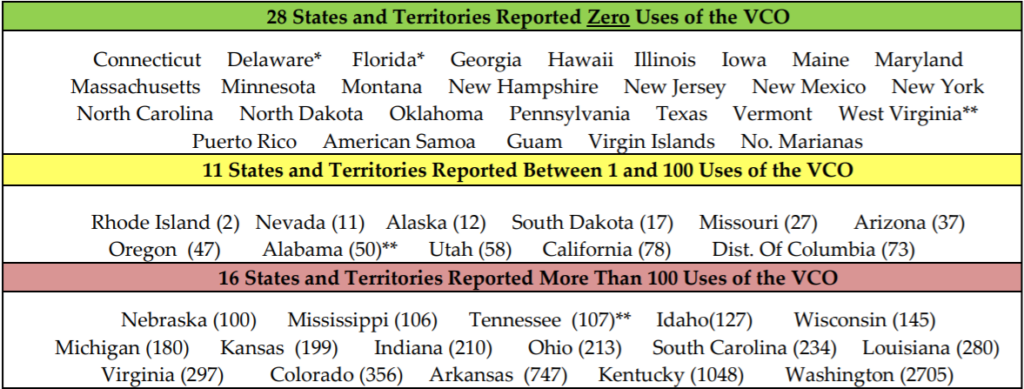
Range of Penalties: Each state is different in the penalties a court may impose on a juvenile who is found to be a status offender. Many states allow courts to suspend drivers licenses, or require the youth to pay a monetary restitution. Most states also allow courts to place youth in a confined facility, if she or he violates a VCO. Other states allow courts to order parents to comply with certain services such as counseling.
Disturbances in School as a Status Offense
Students as young as six have been criminally charged for offenses including: throwing tantrums, slamming doors, kicking trash cans, tapping a pen, repeatedly burping, and flying paper airplanes.
At least 22 states and many cities and towns outlaw school disturbances. For example:
- South Dakota bans “boisterous’ behavior at school.
- Arkansas bans “annoying conduct”, which is an extremely vague standard.
- In Florida, it is a crime to interfere with the “lawful administration or functions of any educational institution” or to “advise another student to do so.”
- In Maine, interrupting a teacher by speaking loudly is a civil offense, punishable by up to a $500 fine.
- Washington & Delaware do have laws concerning disturbing schools, but these are rarely invoked.
- In South Carolina, “disturbing schools” was used extensively as a juvenile charge for years. Between 2001 and 2016, approximately 29,000 disturbing-school referrals were made to the South Carolina Department of Juvenile Justice, an average of roughly 1,800 referrals per year during that period. That equals about five students per day statewide being referred under the statute.
- Nationally, similar “school disturbance” laws have resulted in thousands of student arrests each year, with estimates around 10,000 arrests annually across the United States prior to reforms in some states.
Across the country, judges have different variations of the definition of disturbance. For example:
- In Georgia, a court concluded that a fight qualifies as disturbing school if it attracts student spectators
- Whereas, in Maryland a court found that attracting an audience does not create a disturbance unless normal school activities are delayed or cancelled.
- By contrast, in Alabama a court found that a student had disturbed school because his principal had to meet with him to discuss his behavior. However, an appeals court overturned this ruling on the grounds that talking with students was part of the principal’s job.
Although police and policy makers argue that these laws make classrooms safer, the laws punishing behavior are punishing conduct that many would not personally view as criminal.
These laws generally prohibit conduct that “interferes with,” “disrupts,” or “disturbs” the orderly functioning of a school. Unlike traditional delinquency charges tied to clearly defined criminal acts, these statutes often rely on broad language describing behavior that is disorderly, defiant, or disruptive in an educational setting. In some jurisdictions, a student may be referred to juvenile court after repeated disciplinary incidents, while in others, even a single incident can trigger law enforcement involvement.
One of the major concerns with disturbing-school statutes is their vagueness. Terms like “disrupt,” “interfere,” or “disturb” can be interpreted subjectively by school officials or school resource officers. What one administrator views as normal adolescent behavior, another might deem criminal disruption. Because the definitions are not always tightly drawn, enforcement can vary widely between districts, schools, and even individual staff members. This vagueness creates room for uneven application and increases the risk of disproportionate enforcement against certain groups of students.
Research and civil rights reporting have shown that school-based offenses are often enforced disproportionately against students of color, students with disabilities, and students from lower-income backgrounds. When routine disciplinary matters are escalated to law enforcement, students may enter the juvenile justice system for behavior that might otherwise have been handled internally by the school. This dynamic contributes to what is often described as the “school-to-prison pipeline,” where minor behavioral infractions result in court involvement, records, and long-term consequences that extend far beyond the classroom.
The impact can be particularly severe for neurodivergent students, including those with ADHD, autism spectrum disorder, sensory processing disorders, or emotional regulation challenges. Behaviors associated with these conditions, such as impulsivity, difficulty with transitions, vocal outbursts, or struggles with authority, may be misinterpreted as intentional defiance or disruption. When vague “disturbing school” statutes are applied without adequate understanding of disability-related behaviors, neurodivergent students face a heightened risk of criminalization for conduct linked to their neurological differences. Instead of receiving accommodations, behavioral supports, or individualized education interventions, these students may be funneled into the juvenile court system, compounding stigma and potentially worsening academic and mental health outcomes.
Read more about States Making “Disturbing School” a Crime
Read more about Arrests in Schools
Truancy Status Offenses
More than 150,000 cases annually commonly lead to fines, loss of custody, and probation for the juveniles & parents.
According to The Marshall Project, over 1,000 truant children and teens are removed from their homes with their parents every year and placed in foster homes, group homes, or juvenile detention centers only on the grounds of absences from school.
15,000 truant children and teens are placed on juvenile probation every year, with probation violations including breaking curfew or missing additional days of school leading to detention or out of home placement.
In October, 2014, Florida State Attorney’s office issued warrants for the arrest of 44 Jacksonville parents of truant children.
A 2013 law in Delaware required schools to refer truant students for prosecution.
In California, Governor Jerry Brown signed a law that gave county prosecutors & public defenders seats on school- based attendance review boards that can levy sanctions against truant children & their families.
Why The Status Offense System Is Bad for Children
The status offense system is not good for children because as “matters of judgement”, status offenses depend on social expectations for how children should act.
This is an issue because what most people define as “normal behavior” for different ages can vary. For example, when a 13 year old becomes angry and begins to act in a hostile, irrational manner, most people would consider him or her as merely troubled. Yet, the same behavior by a 17 year old would be seen as immature. When a preteen engages in an extremely violent act, society is alarmed by the anti-social behavior because the preteen should be learning to live by society’s norms. Assumptions about “normalcy” of delinquency depend heavily on how the misbehavior fits the juveniles age and level of development.
In status offense cases such as “beyond parental control,” “ungovernable,” or similar CHINS/PINS proceedings, juveniles often face court involvement because a parent, guardian, or school has filed a petition against them. Although the U.S. Supreme Court recognized in In re Gault that juveniles are entitled to due process protections, including the right to counsel in delinquency cases, status offenses are technically civil matters. This creates a gray area, meaning,while many states now provide appointed counsel in status cases (especially where detention is possible), the constitutional guarantee is not as clearly defined as it is in criminal proceedings.
When a status offense petition is filed, courts typically appoint a public defender or juvenile defense attorney at the youth’s first appearance if the child cannot afford private counsel. Because the parent is often the complaining party in “beyond control” cases, the youth’s legal representation is independent of the parent. In some jurisdictions, courts may also appoint a guardian ad litem (GAL), whose role is to advocate for what the court considers the child’s best interests. This differs from a defense attorney, who must advocate for the youth’s expressed wishes.
This structure can expose a potential flaw in the juvenile justice system. Status offense cases are framed as rehabilitative and civil, yet they can still result in court supervision, placement, or even detention in some circumstances. Because the right to counsel in these cases is sometimes grounded more in statute than in clear constitutional mandate, protections may vary by state. Additionally, the use of guardians ad litem alongside or instead of defense attorneys can blur the line between advocacy and paternalism. This structure potentially diminishes the youth’s voice in proceedings that directly affect their liberty and family relationships. In effect, young people can be drawn into adversarial legal processes initiated by their own parents while navigating a system that does not always treat their autonomy or procedural rights with the same clarity afforded to adults.
The use of fines as punishment in Status Offense cases is disproportionately severe towards young people. It is a simple fact that young people do not have the same opportunities to make money as adults, due to labor restrictions. So when young people are forced to pay fines as a consequence for a minor status offense (such as disturbing school), they are usually unable to do so. In most circumstances, this would pass on the fine to the parents, which disproportionately affects low-income families. Along with this, oppressive parents may enact overly harsh disciplinary measures onto the young person, worsening their well-being. In some cases, discipline is a valid response to a young person legitimately causing a problem. However, as previously discussed, certain status offenses, especially related to disturbing school, can be issued to students for incredibly minor infractions. The parents then doubling down on punishing the student, further cements extra consequences onto the young person’s life for something that could have been solved easily in the school without the need for a status offense.
Illinois banned police from issuing tickets for city ordinance violations in schools. This was because schools were outsourcing discipline to police by fining students for violations like disorderly conduct and other unnecessary infractions.
Preponderance of the Evidence Standard
In many status offense proceedings (such as truancy, running away, or “beyond parental control”) and other juvenile court matters categorized as civil, including some CHINS or PINS cases, courts often apply the lower “preponderance of the evidence” standard. Under this standard, the petitioner only needs to show that it is more likely than not (just over 50%) that the allegations are true. This is the same burden of proof used in typical civil lawsuits. Because status offense proceedings are technically civil rather than criminal, courts justify using the lower standard on the grounds that the purpose is rehabilitative, not punitive.
The difference between these standards is significant. “Beyond a reasonable doubt” demands a high level of certainty before the state can intervene in a young person’s liberty. “Preponderance of the evidence,” by contrast, allows court involvement based on a much lower threshold of proof. This can be problematic because even civil status cases can result in meaningful restrictions on a youth’s freedom, including court supervision, mandatory programs, placement outside the home, or, in some circumstances, secure detention for violating court orders. In effect, a child may experience serious consequences without the same evidentiary protections guaranteed in criminal proceedings.
This distinction highlights a structural tension in juvenile justice: the system is labeled rehabilitative and civil in many contexts, yet it can still impose significant liberty restrictions. When a lower burden of proof is used in cases that may ultimately limit a youth’s freedom, it shows that youth are not granted access to the same fairness, procedural protection, and safeguards as adults.
Laws & Legal Precedents
The Parens Patriae Doctrine
The Parens patriae doctrine, also known as the “parent of the country,” includes the right of the state to take control of children whose parents were unable or unwilling to meet their responsibilities or of children who pose a threat to the community. In addition, it allowed courts to assert control over criminal and noncriminal conduct of juveniles (status offenses) (JJDPA Fact Book).
15 year old Valerie Walker was found to be “an undisciplined child and in need of the discipline and supervision of the State” because she was regularly disobedient to her parents. The court placed Walker on probation with the conditions that she must obey her mother and attend school. She violated these terms of her probation, and thus, the court determined she was a delinquent and committed her to the North Carolina Board of Juvenile Corrections.
On appeal, the “two main arguments for providing counsel to a non-criminal offender such as Walker failed” (Minnesota Journal of Law & Inequality). One contention was that counsel should have been present at the hearing that found Walker to be an undisciplined child. Yet, the court determined that she lacked the right to counsel, because she was found to be an undisciplined child, and as such, she could not be incarcerated in a juvenile justice center.
Walker argued that her right to counsel should be recognized because a violation of probation means the child is delinquent, and thus subject to commitment. This argument also failed because the court found the adjudication not to be a criminal prosecution under the 6th Amendment.
This demonstrates that a conviction of a status offense may later affect adult adjudications and might place the child at risk of being incarcerated for violating the terms of her conviction, yet, courts continue to refuse to recognize a right to counsel for this group of juveniles. The consequences of conviction should require that a status offender receive the right to counsel in order to provide procedural protections to status offenders.
Punishments For Status Offenses
Federal law forbids locking up youth charged with status offense except under limited circumstances involving a “Valid Court Order” as discussed below.
1974: The 1974 mandate of the federal Juvenile Justice and Delinquency Prevention Act “prohibited the secure detention” of status offenders, focusing on deinstitutionalization (Steinhart, 1996, p. 86). This requirement focuses on alternatives to placing juveniles into detention facilities for status offenses.
Congress understood that locking up the youth for a status offense did not resolve the factors that ultimately led the children to commit the crime. Rather, this Act was designed to ensure that the children, who may have mental health or educational needs, receive help from a human services agency, as opposed to receiving help from the juvenile justice system (“Status Offenses”, p. 1).
However, a 1980 amendment, known as the “Valid Court Order” exception, allows for status offenders to be locked up for a second “and subsequent” status offense, such as violating a court order not to commit another status offense (“Status Offenses”, p. 1). But the JJDPA, the main federal juvenile justice law, was amended in 1980 to include an exception allowing judges to confine a youth adjudicated guilty for a status offense if the child had violated a “valid court order” not to repeat the offense.
Since 1984, the Valid Court Order (VCO) exception to the Deinstitutionalization of Status Offenders requirement has allowed detention of adjudicated status offenders if they violate a direct order from the court. Each year the VCO exception contributes to the locked detention of thousands of non delinquent youth. Even though the DSO protection remained intact, judges and others were given the option of placing adjudicated status offenders in locked detention if they violated a VCO, such as “stop running away from home” or “attend school regularly.” Ultimately, the VCO exception has amounted to “bootstrapping,” as it takes a status offense, protected from secure/locked detention under the JJDPA, and converts it into a delinquent act that is not entitled to the same protection.
VCO’s make it easier for a court to determine a status offender as a delinquent. Once a status offender has entered the juvenile court system, it is more likely that a court will find the child guilty as a delinquent if the behavior persists (and is found through the means of a violated VCO). Therefore, the court can by doing this impose a more serious sentence.
JJPDA: In 1974, Congress passed the Juvenile Justice and Delinquency Prevention Act (JJDPA) to provide a set of standards for court-involved youth across the country. This act includes four core requirements that states must comply with in order to be eligible for federal juvenile justice funding under the statute (Coalition for Juvenile Justice).
Deinstitutionalization of Status Offenders – This provision seeks to ensure that status offenders who have not committed a criminal offense are not held in a secure juvenile for extended amounts of time, or in a secure adult facility for any amount of time. Rather, this provision seeks to treat the youth with community based services, such as counseling and family support.
Adult Jail and Lock up Removal: Youth cannot be detained in adult jails and lock ups except for small amounts of time before or after a court hearing (6 hours), in rural areas (24 hours in addition to weekends or holidays), or in unsafe travel conditions. This does not apply to children who are tried or convicted in adult criminal court of a felony. This provision is meant to protect children from psychological abuse, physical assault, and isolation
Sight and Sound Separation: When children are placed in an adult hail, “sight and sound” contact with adults is prohibited, in an effort to prevent children from psychological abuse and physical assault. Children cannot be housed next to adult cells, share dining halls, recreation areas, or any other common spaces with adults. Note that this does not apply to children who are tried or convicted in adult criminal court of a felony.
Disproportionate Minority Contact: States are required to assess and address the “disproportionate contact of youth of color at all points in the justice system” – ranging from arrest to detention, to confinement. This provision requires states to research and analyze information and assess the reason for disproportionate minority contact.
- Research has shown that youth of color receive tougher sentences and are more likely to be incarcerated than white youth for the same offenses.
- Youth of color makes up ⅓ of the youth population, and ⅔ of the youth in the juvenile justice system.
Incarceration
Impact of Locking Kids Up (Institutionalization)
In some cases, status offenders are placed in the same institution as juveniles who have committed more serious crimes. Researchers have observed that this placement may ultimately increase “deviant attitudes and behaviors among status offenders”, such as the development of antisocial perspectives and attitudes, as well as the development of gang affiliation (“Status Offenders”, 2015, p. 2).
According to Levin and Cohen, juveniles who are incarcerated must eventually navigate the “barriers to reentry in the community” as well as in their home and school. Such transition has an increased chance of the juvenile being rearrested and re- incarcerated (“Status Offenders”, 2015, p. 3). In fact, research has proven that incarceration and confinement fail to address the true causes of a juvenile’s status- offending behavior, therefore, the system does not deter the juveniles from committing crimes in the future.
Even though status offenses are nonviolent, and the youth are considered non-criminal, the juveniles who commit these offenses often possess risk factors for future offending, and these risk factors have the potential to be aggravated by the “formal processing” of the juvenile justice system.
“Aging Out”
Most youth naturally “age out” of committing crimes when “social controls are enforced” (“Status Offenders”, 2015, p. 3).
However, institutionalization can nullify this process of development. When juvenile delinquents are institutionalized, they are put into a situation consisting of a constant fear and threat of physical and emotional harm.
When juveniles are institutionalized, they are stripped of social connections linked to family, community and friends. Consequently, the juvenile’s social development is delayed and diminished while institutionalized.
Holman and Ziedenberg report that institutionalization can ultimately “increase violent tendencies, exacerbate risk factors, and increase recidivism rate” (“Status Offenders”, 2015, p. 3).
Alternatives To Incarceration
Research has shown that community-based programs can be more effective than institutionalization in the area of preventing the juvenile (status offender) from committing more criminal acts in the future.
Research highlights the need to strengthen familial relationships of the status offenders, create “social- control mechanisms”, and form protective factors for the future of the juvenile, in an effort to prevent future criminal acts (“Status Offenders”, 2015, p. 3).
Status offenses are best dealt with through interventions involving the community, family, schools, churches, and non- profit organizations that act as a support system to the youth. Typically, the youth are brought to court because their families, teachers, and other authority figures cannot manage their behavior.
Unlike more serious offenses, status offenses do not put the safety of the public in danger, inflict harm on others, or result in loss of life or property. Sometimes, status offenders are confined because relevant treatments available in residential facilities are not available in the community. This is an unacceptable condition for confinement of status offenders. State & local communities that lack the appropriate resources and treatments are responsible to reverse the situation.
Examples of Alternatives
Peer Support Groups: Groups where kids can talk to others going through similar problems. Such groups can help youth feel supported, learn from others, and make better choices. Such participation in a peer support group can help reduce the chances of the juvenile getting into trouble again.
Mentoring Programs: Mentoring programs can connect children with positive role models who can help teach healthy life skills and behaviors. Participation in mentoring programs can help youth make smarter decisions and avoid risky behavior especially when such guidance is not being received at home.
Truancy Prevention Programs: Truancy prevention programs help kids who skip school by offering tutoring, counseling, and family support. These programs keep children out of school trouble by providing them with necessary guidance.
School Counseling: School counseling provides one-on-one or group help for school, behavior, or emotional issues. Counselors can teach kids how to handle stress and solve problems which will in turn stop small issues from turning into bigger problems.
Parenting Skills Workshops: Parenting skill workshops teach parents how to handle their kids’ behavior and communicate better which helps create structure and support in home life for the child. Such workshops help prevent kids from acting out in addition to helping parents become better role models.
Leadership Development Programs: Leadership and development programs teach teamwork, decision-making, and goal setting. Additionally, such development programs provide kids a positive outlet to use their energy while encouraging responsibility and confidence.
Anger Management Programs: Anger management programs show kids how to control their anger and handle conflicts calmly. Such programs use tools like deep breathing or problem-solving exercises which can help prevent fights and trouble at school or home.
Substance Use Counseling: Substance abuse counseling helps kids who abuse the use of alcohol or drugs by teaching them about risks of such abuse and providing healthier ways to cope with stress. Such counseling can stop small problems from becoming bigger legal or health issues.
Cognitive-Behavioral Therapy: Cognitive behavioral therapy helps kids notice and change negative thoughts that lead to bad behavior. This type of therapy teaches problem-solving, emotional control, and better choices which reduces the chance the children will get into trouble again.
Low-Risk Behaviors
Not all status offenses require formal court involvement. For example, although alcohol use by minors is illegal in all states, interventions should focus on individuals whose behavior might lead to substantial risks. This can include repeated truancy, constant running away, or unsafe substance abuse.
By avoiding unnecessary court involvement for low-risk behaviors, and instead using resources such as those discussed above, youth can continue normal development without the negative effects of detention or criminal labeling. Such detention and criminal labeling can create a negative stigma that will attach to the child for life.
Supporting Programs & Projects
SOS Project: The SOS Project guides states in implementing strategies that divert non-delinquent youth from juvenile courts and locked confinement. Such project aims to do so in order to connect youth to family & community based systems of care that will help and benefit the youth.
Juvenile Detention Alternatives Initiative (JDAI): Juvenile Detention Alternatives (JDAI) works across the United States to keep minors out of unnecessary juvenile detention. JDAI helps communities create alternatives for handling youth misbehavior by providing support services and promoting fair treatment for youth. The program focuses on keeping youth connected to their families and friends while giving them a chance to improve without being locked up.
Restorative Justice Programs (Equal Justice USA): The Restorative Justice Programs (Equal Justice USA)give minors a chance to fix the harm they have caused instead of going to court. Individuals affected by an incident will meet to discuss the harm caused and decide on ways to repair it. This type of program helps kids learn responsibility while also supporting everyone involved.
School-to-Prison Pipeline
School based programs typically have three objectives:
- Keep potential truants in school
- Reduce school violence
- Improve the academic performance of at-risk youths
Studies have shown that school programs specifically designed to get services for at-risk youth can reduce the rate of serious juvenile delinquency while also improving performance.
Experts believe these programs must be adopted with caution. When the courts get involved in schools, there is always a danger that they will deepen the involvement of pre-delinquent youth in the juvenile justice system rather than prevent it. This is because research shows that officials are more likely to involve minority youths in the justice process than white youths, even when their misbehavior is the same. This disparity highlights the problem of racial profiling that arises from school-based programs.
In 2014, A study by the US Department of Education’s Office for Civil Rights released data displaying that black students are suspended and expelled at three times the rate of white students.
In 2014, California State Legislature passed a state law (AB420) which prohibited public schools from expelling or suspending students in 3rd grade or below for “willful defiance.”Willful defiance can range from disruption to forgetting to bring materials to class. At the time of the passing of the law, willful defiance was the most common offense for out of school suspensions, especially for minority students.
In Pennsylvania, more than three days of unexcused absences from school can result in parents & kids being sent to court where they can face fees and fines for each extra absence.
Read more about American Education: Race and School Suspensions
The school-to-prison pipeline ultimately deprives students of color of their futures by pushing them out of school, including its pathway to college and careers, and into the juvenile and criminal justice systems. “The pipeline is the result of an array of policies and practices, fed by institutional racism, that disproportionately affect students of color, including those who identify as LGBTQ, have disabilities, and/or are English Language Learners.” (National Education Association Policy Statements)
The policies and practices include harsh school discipline policies that overuse suspension and expulsion. For example, “zero-tolerance” policies criminalize minor infractions of school rules and increase policing and surveillance in schools which create prison-like environments in schools.
Students who are suspended or expelled not only fall behind academically but are significantly more likely to drop out of school altogether, fail to secure a job, rely on social welfare programs, and end up in prison.
The school to prison pipeline is attributed in part to zero tolerance discipline policies that have increased suspension and expulsion rates. Additionally, this has partially led to an increased presence of police in schools.
50 years ago, there were not many officers that patrolled school halls. According to the Cato Institute, more than 50% of US schools have assigned police, typically called school resource officers (SROs).
According to the American Civil Liberties Union, students that are arrested are three times more likely to drop out, even if their case never goes to trial. These students are also more likely to reenter the criminal justice system as adults. This criminal record follows them into adulthood.
Click here to read some interesting stories about the School to Prison Pipeline
Resources and References
National Juvenile Defender Center. (n.d.). Status Offenses | NJDC. Retrieved from https://www.defendyouthrights.org/wp-content/uploads/National-Standards-for-Care-of-Youth-Charged-with-Status-Offenses-2015.pdf
Office of Juvenile Justice and Delinquency Prevention. (2015, September). Status Offenders. Retrieved from https://www.ojjdp.gov/mpg/litreviews/Status_Offenders.pdf
Steinhart, D. J. (1996). Status Offenses. Retrieved from
https://pubmed.ncbi.nlm.nih.gov/9117369
http://www.nolo.com/legal-encyclopedia/juvenile-law-status-offenses-32227.html
https://search.issuelab.org/resource/status-offenses-a-national-survey.html
https://www.vera.org/publications/status-offense-toolkit
https://www.aecf.org/work/juvenile-justice/jdai
https://ejusa.org/issues/healing-justice/restorative-justice-work/restorative-justice-diversion