
According to the American Psychological Association (APA) discrimination should be defined as the “unfair or prejudicial treatment of people and groups based on characteristics such as race, gender, age, or sexual orientation. On their website, the APA calls discrimination a “public health issue” that is linked to “anxiety, depression, obesity, high blood pressure and substance abuse.” Sadly, the United States has a serious age discrimination problem. At NYRA we stand against discrimination and actively work against ageism in all facets of society. To end age-based discrimination, we must fight against the prejudicial mistreatment of people based on the date of their birth. This problem presents itself in many ways, including:
- Business Discrimination
- Inability to Vote
- Inability to Hold Office
- Lack of Medical Autonomy
- Censorship
- Driving Restrictions
- Labor Restrictions
- Curfew Laws
- Parental Oppression
- Justice and Statutory Discrimination
- Social Media Bans and Restrictions
- Financial Discrimination
- Investment Discrimination
- Gambling Discrimination
- Hotel Booking Age
- Car Renting Age
Business Discrimination
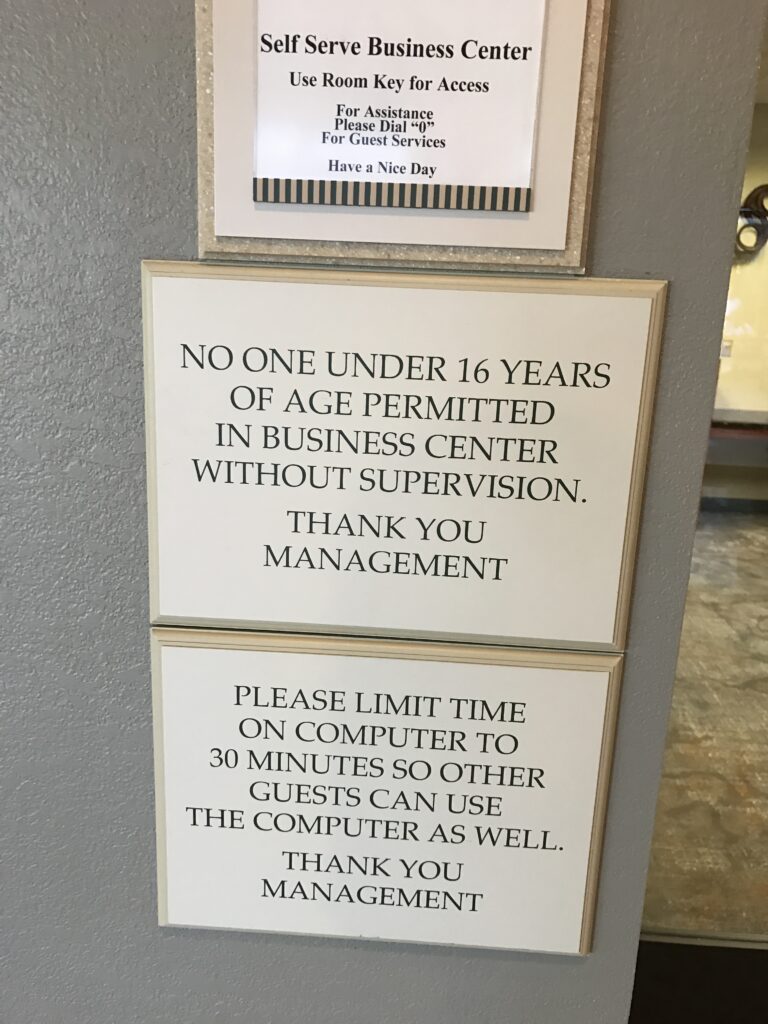
Businesses are often responsible for discrimination against young people. For example, store bans are common. Across America, over 1,000 malls and shopping centers have banned young people in some capacity, often banning young people from being present without a legal adult on weekends. Businesses banning an entire demographic, based on nothing but their age, an immutable factor which someone has no control of, is nothing short of blatant discrimination. Even online, young people face unreasonable restrictions, and are often barred from buying completely legal products, just because of their age. However, business bans are often seen as acceptable, due to the systemic oppression that young people face in our society. Young people should have the right to freely enter businesses and buy products from whoever they please, instead of being unjustly discriminated against.
Read more about Business Discrimination.
Inability to Vote
In the US, no citizen under the age of 18 is allowed to vote in federal elections. While some states have lowered the voting age in local elections to 16, most states maintain this discriminatory age requirement. Young people pay taxes, and are equally as affected by government policy decisions as adults are. Therefore, young people deserve to have a say in their government, and deserve the right to vote. In fact, the lack of young peoples’ voting rights directly empowers several other discriminatory laws being passed to restrict the freedom and civil liberties of young people, since politicians don’t have to fear a backlash from the young people whom the laws affect. Because of this, young people are rarely seen as valid constituents by politicians, since politicians know they don’t have to work for their votes. Giving young people the right to vote will hold politicians accountable, allow a youth voice in government, and prevent further restrictions of youth rights.
Read more about Lowering the Voting Age.
Inability to Hold Office
Minors and young adults are completely barred from holding office in the United States. There are few constitutional restrictions in order to run for office in the country, but one that always seems to hold true, is a minimum age. A citizen must be at least 35 years old to run for president, 30 years old to run for senate and 25 years old to run for representative. These arbitrary age restrictions are blatantly discriminatory, and deny the ability to have proper representation. This is often justified by saying that younger candidates don’t have the experience, and are too incompetent to hold office. However, in the United States, we operate as a democracy, meaning leaders are elected by the people. Therefore, if the people believe a young candidate is too inexperienced or incompetent to represent them, then that candidate will not be elected by the voters. The discrimination in the age of candidacy denies competent, experienced and intelligent young people from being able to run for office.
Read more about Age of Candidacy.
Lack of Medical Autonomy
Young people are denied basic medical autonomy in the US. Most medical decisions for children are made by the parents, even at the opposition of the young person receiving the treatments. This can lead to young people being forcibly medicated, which can hinder their life. Along with this, it can lead to medical neglect from parents, where they refuse to provide their children with optimal medical care, including access to vaccines. Therapy and access to suicide prevention support is also often restricted. In most states, minors are not allowed to receive therapy without the consent of their parents. Minors are also often forced to go through dangerous procedures, such as conversion therapy, at the request of their parents. Youth greater control over their bodies, and what medical treatments they are allowed to refuse, or acquire without parental consent/notification.
Read more about Lack of Youth Medical Autonomy.
Censorship
Young people often have basic and necessary information censored from them, for completely unjustified reasons. Censorship establishes an arbitrary age at which a child is determined old or mature enough to consume content deemed “adult”. These restrictions are often based in religious puritanism, and prevent young people from being properly educated on certain topics related to the world, health, or their own anatomy. Along with this, students often face educational censorship, including book bans, and removal of controversial media from classrooms. Young people deserve to have free access to media and information just as adults have.
Read more about Censorship.
Driving Restrictions
Most states establish an arbitrary driving age at 16, with 15.5 year olds being able to receive learners permits. Establishing a single age for when one is allowed to drive ignores the context of an individual’s history, life and competence, and only focuses on their immutable factors, which they have no control over. Along with this, most “provisional” drivers licenses for minors come with extra unnecessary restrictions. These restrictions often include rules that minors aren’t allowed to drive past a certain time at night, or have multiple other minors in the vehicle with them. These restrictions hinder youth’s ability to work and socialize with others, for no justified reason. Youth deserve the same driving privileges as adults, and shouldn’t be discriminated against based on their age.
Read more about the Driving Age.
Labor Restrictions
Minors often have unnecessary restrictions on their labor, which hinder their ability to make money. Young workers face significant barriers in finding a job, getting paid a fair wage and in receiving promotions and equal respect on the job. Some of these barriers are the result of unconscious assumptions, biases and stereotypes that employers hold against young workers, others are put in place by law and by corporate policy. Many states have a lower minimum wage specifically for young people, or have unreasonable restrictions on the amount of time that young people can work. Young people deserve greater freedom over their labor, and the same protections and wage requirements as adults.
Read more about Labor.
Curfew Laws
Young people are routinely discriminated against by curfew laws. Curfew laws specifically prevent people under 18 from being outside during a certain period of time. This hinders youth socialization and ability to work. Curfews that target young people violate their freedom of movement and are ineffective at reducing crime. They punish minors for being outside and do not keep anyone safe.
Read the top five reasons to abolish the curfew.
NYRA has compiled a list of hundreds of curfew laws in each state in the US.
Read the full list of Curfew Laws by State.
Parental Oppression
Young people with overly strict, toxic, controlling and manipulative parents are often pushed down and oppressed by them in ways that severely harm their development, but aren’t technically considered child abuse under legal definition. This can include parents violating their privacy, seizing their legally acquired property, isolating them from friends, instituting overbearing responsibilities and expectations, or using corporal punishment. Young people deserve more of a legal basis to fight back against parental oppression, and a clearer pathway to emancipation, to free them from living with parents that objectively harm them and do not have their wellbeing at heart.
Read more about Parental Oppression.
Justice and Statutory Discrimination
Young people experience severe discrimination from the justice system in many ways. Juveniles are not guaranteed the same constitutional rights and protections as adults. For example, juveniles in most states are not allowed to receive a trial by jury, with all of their cases being decided by a judge. Juvenile offenders also do not receive the same due process protections as adult offenders. Along with this, all states in the US have statutory “status offenses”, which are crimes that only apply to minors. These crimes are often vague and unreasonable, such as disobeying parents, running away, or “disturbing school”. In other court experiences, such as custody battles, juveniles are given extremely limited autonomy, despite them being the focus of the disagreement. Young people deserve the same rights in the court system as adults do, and shouldn’t have specific laws targeting them for vague behavior.
Read more about Juvenile Justice and youth rights.
Social Media Bans and Restrictions
Young people are often prevented from accessing social media platforms, due to their age. Social media provides a wealth of benefits for young people, including helping them stay connected to their friends, allowing them to experience various aspects of world cultures, allowed them to stay education on certain topics, allowing them to speak out on various issues that they are passionate about and most importantly, find safe places with individuals who have similar interests. Young people deserve free access to social media just as adults are, and instead of laws regarding “protecting” young people on social media involve banning them from it, they should involve proper education of online safety.
Read more about Social Media Bans and Restrictions.
Read about the Harms of Social Media Bans and Restrictions for Minors.
Financial Discrimination
Young people face major barriers when it comes to their finances. First of all, they do not have the ability to even open checking accounts that they manage independently, and instead are forced to rely on parent managed, “teen accounts”, which limits their autonomy. Along with this, they cannot apply for or receive credit cards until turning 18 years old. Even the money that they do have is not safe, as minors have no legal pathway to protecting themselves from theft of money by their parents. Youth deserve control over their finances, and an ability to build credit before turning 18 years old.
Read more about How Banks’ Policies Discriminate against Youth.
Investment Discrimination
Young people are often not allowed to invest independently, and are barred from creating accounts on investing apps. Young people deserve the ability to buy stocks, bonds, and other investments, and have complete control of them independently of their parents.
Gambling Discrimination
Young people are prevented from gambling by state law, making them unable to engage in both luck based (ie, lottery, slot machine) gambling, and skill based (ie, poker, sports better) gambling. While this is a risky behavior, risk is good for youth development, and will either humble them, or allow them to use their intelligence to earn money. Youth should not be restricted from gambling, simply on the basis of their age.
Hotel Booking Age
Minors are usually barred from booking hotel rooms on their own. Along with this, some hotel chains have even been unknown to increase age restrictions, making someone after to be in their 20s to book a hotel room. This age discrimination is unreasonable and unnecessary. Being able to book a hotel could be the difference between a youth escaping a dangerous situation having a bed to sleep in, or winding up on the streets. Youth deserve access to booking hotels, independently of their parents or other adults.
Car Renting Age
The age at which someone can rent a car is one of the most disproportionally high age requirements in businesses. Most car rental companies require renters to be well into their 20s, some raising the age limit up to 26 before someone is allowed to rent a vehicle. This discrimination ignores the context of an individual, and deems all young adults as incompetent. Renting a vehicle is necessary for travel, especially when young adults are traveling independently of an older adult. Young adults deserve access to be able to rent a car just as adults can, and shouldn’t have that privilege removed from them solely based on their age.