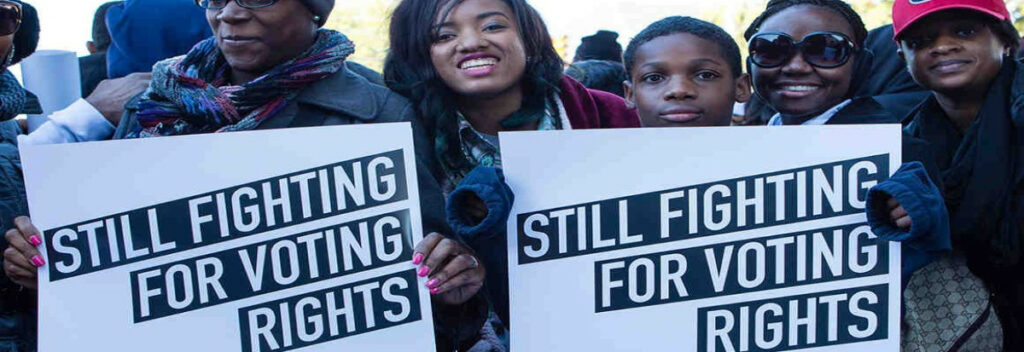

The right to vote is vital to any fully functioning democracy. Not only is it the fairest best way to select the people who make political decisions, but it is how we hold those people accountable and make sure that they listen to us. Young people have the right to be represented and be active participants in political life. We should not be barred from voting, running for office, making political contributions, or any other means of civic engagement. Young people are directly affected by a range of policies concerning education, criminal justice, government spending, and the environment. We contribute to our communities and we pay taxes. We are capable of educating ourselves on the issues and often even do better than most registered voters on civics tests. We deserve the right to be heard.
Along with this, not allowing young people the right to vote, makes it so politicians can freely make policies to strip youth of their rights without any fear of voter pushback- since the one demographic affected is the one demographic who doesn’t have a say in electing representatives. Every youth rights violation in government policy can be traced back to the voting age. Once the voting age is lowered, and young people have representation in government, we can effectively push back against government efforts to restrict our freedom.
In the last twenty years, NYRA members have campaigned in over 20 states and supported dozens of legislative bills to lower the voting age. As our Nodes continue to work at the local, state, and national level, we have seen increased support for lowering the voting age from an ever-increasing number of organizations and politicians.
Top Ten Reasons to Lower the Voting Age
Lowering the voting age is a new concept for many people, but there are many good reasons that show doing so is a sound and ethical choice. These include the fact that young people have adult responsibilities, have no say in making laws they are forced to follow, and the fact that young people tend to have more knowledge of civics than most adults.
Read the full Reasons to Lower the Voting Age.
Voting Age Status Report
NYRA has compiled a list of places that have lowered their voting age to 16, current campaigns to lower the voting age, states that allow 17-year-olds to vote in primaries and other countries that have a voting age under 18.
Read the full Voting Age Status Report.
Voting Age: Facts and Resources
Advocating for the right to vote isn’t easy, but we’ve put together a list of talking points that you can use whether you are talking to your friends and family or writing a speech to give at your city’s council meeting. We’ve also included academic articles and persuasive essays for those who want a more in-depth analysis.
Read the full Voting Age Facts and Resources.
The Movement to Lower the Voting Age: A History
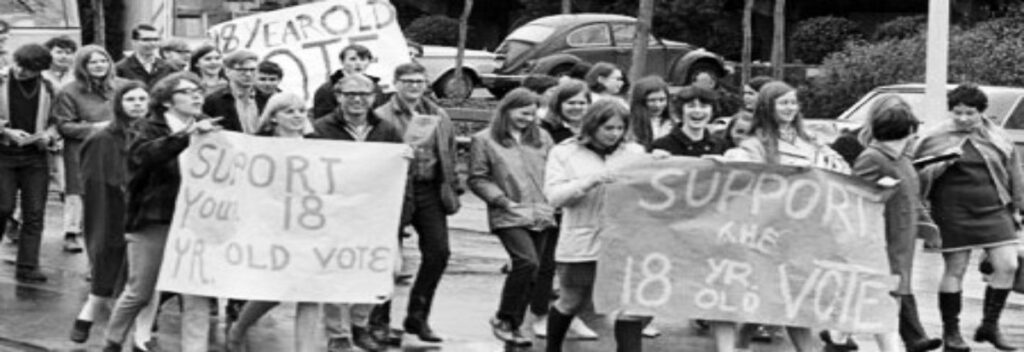
Just like the earlier movement to lower the voting age to 18, the current campaign is part of a decades-long struggle for young people to gain political power. NYRA has compiled a full report on the history of the voting age movement, including historical campaigns, proposed legislation to lower the voting age, and successful instances of the voting age being lowered in local elections.
Read the full Movement to Lower the Voting Age: A History.
Age of Candidacy
Minors and young adults are completely barred from holding office in the United States. There are few constitutional restrictions in order to run for office in the country, but one that always seems to hold true, is a minimum age. A citizen must be at least 35 years old to run for president, 30 years old to run for senate and 25 years old to run for representative. These arbitrary age restrictions are blatantly discriminatory, and deny the ability to have proper representation. This is often justified by saying that younger candidates don’t have the experience, and are too incompetent to hold office. However, in the United States, we operate as a democracy, meaning leaders are elected by the people. Therefore, if the people believe a young candidate is too inexperienced or incompetent to represent them, then that candidate will not be elected by the voters. The discrimination in the age of candidacy denies competent, experienced and intelligent young people from being able to run for office.
Read more about Age of Candidacy.