
School can be one of the worst places in terms of freedom for young people – whether that is due to not being able to choose your own education, or not being able to express yourself, or having a higher chance of being arrested for “being disruptive.” In 1967, the US Supreme Court famously proclaimed that “constitutional rights do not stop at the schoolhouse gate,” meaning that young people in school can expect to have the same rights in school as they do outside of it. Unfortunately, over the years, we have seen Constitutional rights become severely weakened in educational institutions with many fundamental rights considered optional or irrelevant. We believe that ageism is the primary factor in the reason why students’ rights are so often curtailed. We also believe that the best way to learn about rights granted by our society and government is to learn them in an environment that emulates and respects these rights, not one that disregards them by claiming that young people can’t understand them. Students have the right to receive an education in an environment that respects them as full members of society.
Table of Contents
- Student Bill of Rights
- Academic Freedom
- Corporal Punishment in School
- Dress Codes and Uniforms
- Free Speech in Schools
- The Pledge of Allegiance and the National Anthem
- Policing and Punishment in Schools
- School Punishment for Political Activity
- Zero Tolerance Policies
- Search and Seizure
- Student Clubs
- Student Decision Making
- Restraint and Seclusion
- Student Privacy
- Phone Bans in Schools
- GED Testing Requirements
- Fighting for Students’ Rights Through the Courts
The National Youth Rights Association
If you’re interested in Youth Rights, consider volunteering with us. We are always looking for new members and would love to have you on board. If you have a personal story of a violation of students rights or youth rights to share, consider sending us an email at nyra@youthrights.org, and we’d love to help get your story out to the world.
Student Bill of Rights
The Student Bill of Rights was written to help students address their rights and freedoms which they feel are not being acknowledged by the public educational system. This bill of rights has been written, edited, reviewed, and perfected by students and youth rights activists. The authors of this document have made a substantial effort to encompass all of the issues and concerns of today’s student through continual review and reconstruction.
Academic Freedom
Academic freedom, or the right to control one’s education, is an important aspect of the rights students have at school. It includes the right to access resources, to choose your own courses and teachers, and to consent to methods of assessment and evaluation. It also includes the right to decide what is important to learn, and to choose the best-suited environment for learning. Academic freedom is also about students’ freedom of thought and the right to determine for themselves what gets to take up space in their minds. Unfortunately, most schools give students limited control over their academics, denying them this right to academic freedom.
Corporal Punishment in School
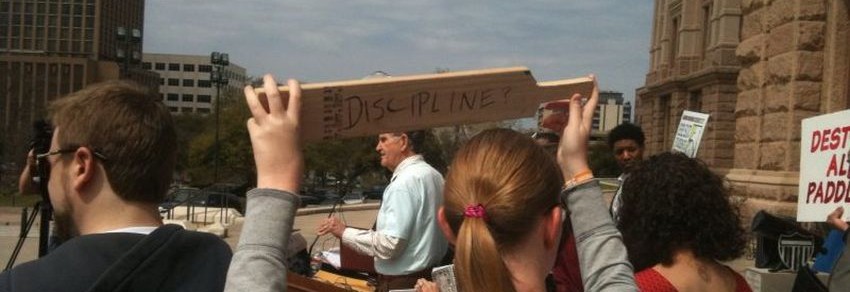
Corporal punishment is the use of physical force to cause pain or harm to someone accused of breaking a law or rule. In schools in the United States, forms of corporal punishment include spanking or slapping, hitting with weapons such as paddles, rulers, or belts, and forcing students to perform physically painful activities such as crawling over rough terrain or excessive running. Several states in the US still allow teachers to use corporal punishment as a method to discipline students. While the rates of its usage vary state by state, the very fact that teachers are legally allowed to assault their own students is a testament to the unfair treatment young people face. Students should never have to fear physical assault, or cruel punishments within their schools.
Dress Codes and Uniforms
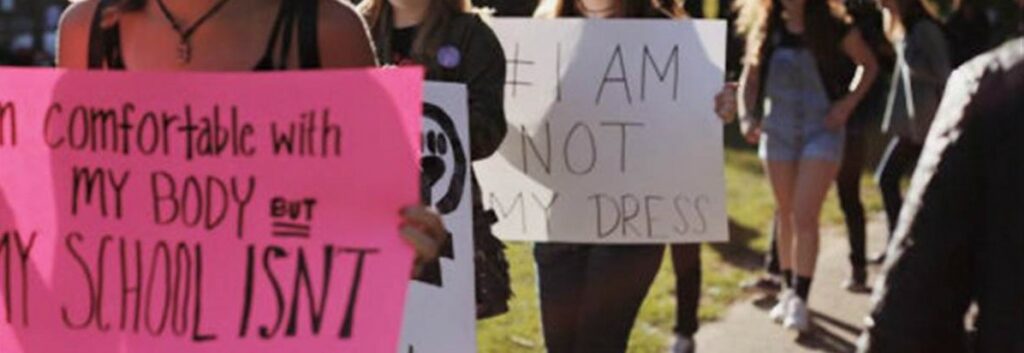
Many school districts in the United States restrict young people’s freedom of expression by making rules around what is acceptable to wear. School dress codes may require students to wear a certain outfit or uniform or may ban specific items, such as hats, jewelry, religious symbols, team jackets, “unnatural” hair colors, items with political messages, or “immodest” clothing. Dress code regulations are usually discriminatory in nature, placing restrictions that unfairly target students of color and women. Dress codes and school uniforms reinforce authoritarianism in schools, and suppress the way that young people can express themselves in a location they are legally required to be. Students should have the right to dress how they want, and not be put down by overly harsh dress code policies.
Free Speech in Schools
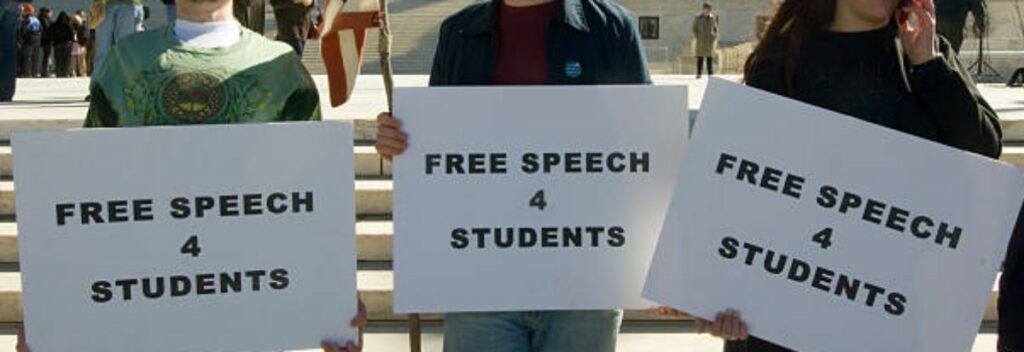
School administrators have frequently tried to censor student speech in a variety of ways: banning clothing with certain messages, removing articles from school newspapers, preventing students from passing out materials at school, turning off the microphone when students are giving a speech, or punishing students for writing material online. Allowing students to have freedom of speech and expression promotes their learning, and the development of independent ideas. The first amendment should not stop at the schoolhouse gates, and students deserve complete and total freedom over their speech that they exercise. Schools should have no right to punish or censor students over their speech both inside and outside of the campus. Constitutional protections should not be dependent on a person’s age.
The Pledge of Allegiance and the National Anthem
Everyone has the right to freedom of expression and shouldn’t be forced to participate in any rituals that go against their personal beliefs. For students in public schools, this includes the right to keep silent or sit down during the Pledge of Allegiance or national anthem. However, many school districts unfairly punish students for refusing to engage in this ritual of indoctrination. Students may refuse to participate in the pledge for various reasons- either religious, moral, or simply that they don’t support the state of the country. All of these reasons are equally valid, and students should have the right to make that choice on their own, free from coercion and punishment.
Policing and Punishment in Schools
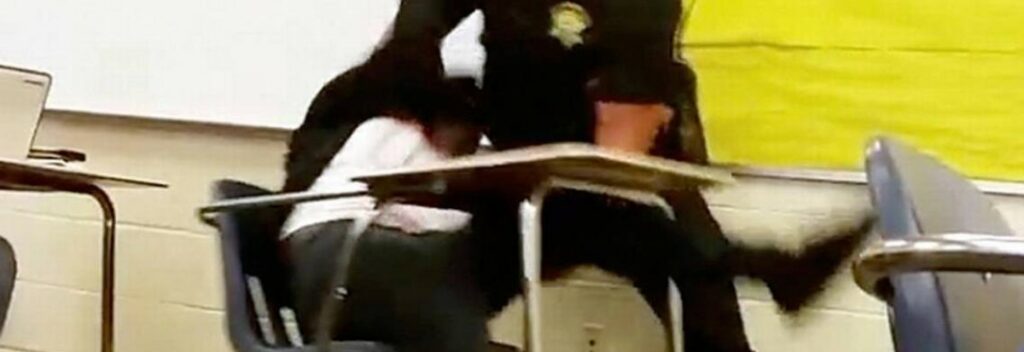
The rights of young people are increasingly threatened as schools implement more policies designed to police and punish a wide range of behaviors. Many of these policies are known collectively as part of the “school-to-prison pipeline.” They involve a variety of elements including increased police presence, unreasonable rules, a failure to respect students’ right to due process, and harsh punishments. Through these policies, schools ultimately treat students like prisoners and therefore undermine their rights in the education system. Along with this, many states have status offenses around “disturbing school” allowing charges to be filed against students for this behavior, which is incredibly vague and can be left open to interpretation. Schools should not be an authoritarian system that oppresses its students through unreasonable policies. Students should have the right to feel free and respected within schools.
School Punishment for Political Activity
Student political expression refers to when students exercise their First Amendment right to free speech and peaceful assembly by openly expressing political stances and beliefs. This can include marches, wearing symbolic clothing, protesting, and forming student groups focused on political issues. In recent years, student political expression has become increasingly visible amid highly polarizing conflicts and heightened social tensions. In response to this rise there has been an increase in the targeting and restriction of students’ political expression by schools, political figures and even other students. Students deserve the right to organize, protest and engage in political activity in their schools, without fearing punishment, restriction , or retaliation by schools.
Zero Tolerance Policies
Zero tolerance policies are policies that severely punish any violation of a rule, regardless of the particular circumstances of each case. At their core, zero tolerance policies standardize school punishment, instead of relying on individual evaluation of an incident. For example, a student who points a finger gun at another student as a joke may be punished the same as a student who makes a legitimate threat towards a student, if they both fall under the same policy of zero tolerance. This leads zero tolerance policies to be harmful for students and punish them unfairly. A zero tolerance policy might require a school to expel any student who gets into a fight, even if that student was fighting in self-defense or to defend a friend. Zero tolerance has led to students being suspended or expelled for holding up three fingers in a school photo, having a clear plastic toy gun in a backpack, or even doing the right thing such as recording a teacher using a racial slur or disarming a school shooter and saving other people’s lives.
Search and Seizure
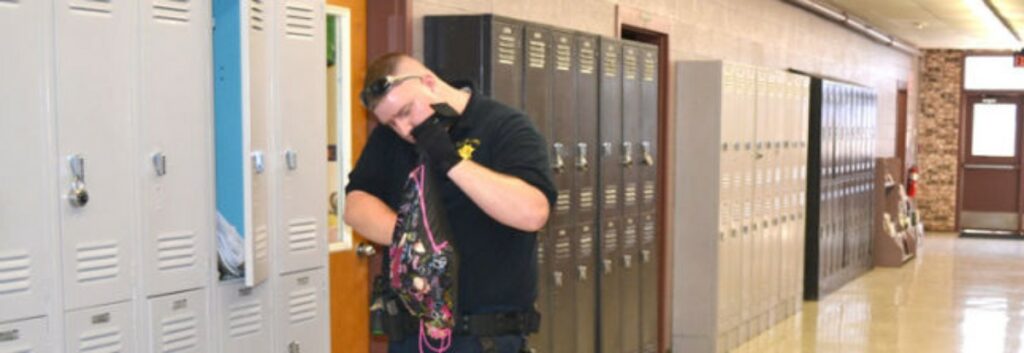
The Fourth Amendment of the Constitution guarantees the right of everyone “to be secure in their persons, houses, papers, and effects, against unreasonable searches and seizures.” This means that if the government (and government institutions like public schools) wants to search your belongings, or take them away from you, they must have a good reason to do so and they must follow the proper procedure. This constitutional protection should apply to everyone equally, regardless of their age. However, schools often seize or search property without proper reason, with completely unjustified policies. Students deserve the right to privacy of their property inside of school, and should not have to fear unreasonable searches by power hungry teachers and administrators.
Student Clubs
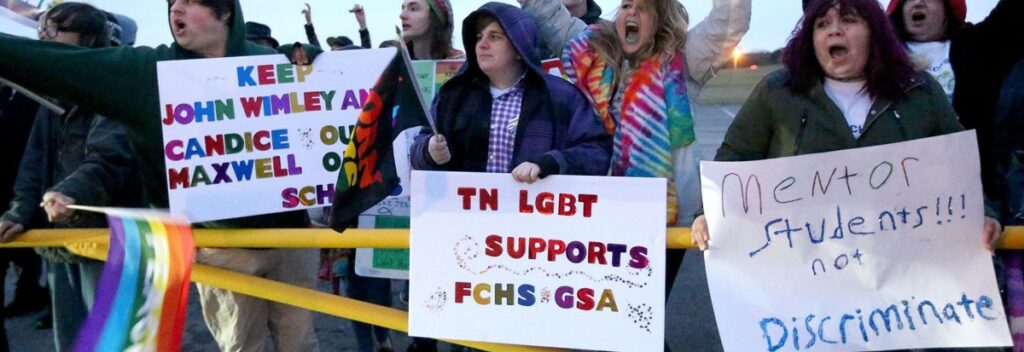
Young people have the right to freedom of assembly and to be active participants in their own education. This includes the right of students to form a club where they can meet with others who share their interests. Unfortunately, however, some schools attempt to curtail the rights of young people by banning certain clubs. Even though it is illegal to ban student clubs solely on political, religious, or philosophical grounds, school administrators often come up with other reasons to ban them. Students deserve the right to form clubs without unreasonable restrictions like needing parental consent, or having a faculty sponsor. In certain schools, clubs have been banned entirely as an objection to one specific club. This behavior from schools should never be tolerated, and schools should always respect students’ rights to assembly.
Student Decision Making
A very important part of a student’s development and learning is having control over aspects of their education. Students can be active participants in their education in many ways, ranging from choosing which learning environment suits them, to being able to participate in the school board, to having a say in school policies. Such involvement in decision-making empowers students with the ability to influence their schools and their educational experience. Schools that offer these decision making processes for students are a step in the right direction to allowing students to self direct their education.
Restraint and Seclusion
Restraint and seclusion are controversial, drastic techniques used to control a student’s behavior in school. Restraint involves a physical or mechanical limitation on the ability to move. Instances of restraint include holding a student’s hands behind their back, a type of physical restraint, or mechanical restraint using objects like handcuffs or rope. Seclusion happens when a student is forcibly placed in solitary confinement and is not allowed to leave. This is an example of cruel and unusual punishment within schools, and should never be seen as acceptable. Students should not have to fear being restrained in secluded in schools, especially as a method of “discipline”.
Student Privacy
Students deserve privacy and protections in school over their personal property such as lockers, backpacks, and cell phones. Unfortunately, schools often institute overbearing, authoritarian policies to monitor and punish students for personal aspects of their lives, such as social media history. Recent state laws have also been forcing schools to inform parents of students’ gender identity, alternate names, and sexual orientation that they exhibit during school hours, further harming student privacy. Students deserve privacy over their social media presence, personal messages, lifestyle choices and identity both within and outside of school.
Phone Bans in Schools
Many schools have instituted phone bans, preventing students from having their devices at school, and confiscating them if they are found. Along with this, many schools have taken this one step further to force students to use lockable pouches for their phones, preventing them from accessing their device throughout the day. Phone bans threaten student safety by preventing them from recording abuses by staff, or contacting help during an emergency. Students should have the right to possess their own property at school, and shouldn’t fear it being confiscated.
GED Testing Requirements
GEDs allow people to obtain the equivalent to a high school degree without having to go through all four years of highschool. This can be incredibly beneficial for students, allowing them to graduate early and get a head start on their education. However, many states have unreasonable policies to restrict students from taking GED tests, often requiring them to be a certain age, or have been homeschooled. The only requirement for a GED, should be if the student can pass the test. Any other restriction is unnecessary and discriminatory.
Fighting for Students’ Rights Through the Courts
Many of the rights that students have in school today are the result of students fighting for those rights in the court system. Whenever students have won their cases, they have made it easier for other students to speak up when our rights are violated. There have been multiple lawsuits challenging overbearing policies in schools and fighting against corporal punishment, dress codes, search and seizures, as well as other student rights.